Discover the Unique History Behind the Stunning Abyssinian Breed
The Abyssinian cat, with its striking appearance and captivating history, has long been a favorite among cat enthusiasts. This breed, known for its sleek, ticked coat and expressive eyes, has an enigmatic past that spans continents and centuries. From ancient temples to modern-day homes, the Abyssinian has captured the hearts of many. In this article, we will explore the origins, genetics, physical traits, and cultural significance of this remarkable feline.
Origin Theories: Historical and Geographical Contexts
The exact origin of the Abyssinian breed remains shrouded in mystery, but several theories have emerged over the years. One popular theory suggests that the breed originated from ancient Egypt, where cats were revered as sacred animals. Archaeological evidence, including mummified cats and depictions of felines in art, supports this hypothesis. Some believe that the Abyssinian’s distinctive ticked coat resembles those of the cats depicted in Egyptian hieroglyphics.
Another theory points to the coastal regions of Ethiopia, now known as Abyssinia, as the birthplace of the breed. During the 19th century, British soldiers returning from military campaigns in Abyssinia brought back a few cats, which they presented as gifts to friends and family. These cats, believed to be the ancestors of today’s Abyssinians, were said to have a wild, untamed look that captivated onlookers.
However, it is important to note that the term “Abyssinian” was not used until the late 19th century. Prior to this, these cats were simply referred to as “ticked cats.” The name “Abyssinian” was likely chosen due to the perceived similarity between these cats and the wildcats found in the region of Abyssinia. Despite these theories, the true origins of the breed remain uncertain, adding to its allure.
Genetic Background: Recent Scientific Findings
In recent years, advancements in genetic research have provided valuable insights into the Abyssinian’s ancestry. Studies have revealed that the breed shares common ancestors with other ticked-coated breeds, such as the Somali and Singapura. Genetic analysis has also shown that the Abyssinian’s distinctive coat pattern is the result of a mutation in a specific gene responsible for coat coloration.
Scientists have identified a gene called Taqpep, which is associated with the ticked coat pattern seen in Abyssinians. This gene is thought to have originated in East Africa, further supporting the theory that the breed has roots in this region. Additionally, genetic studies have indicated that the Abyssinian may share a common ancestor with the African wildcat (Felis lybica), the progenitor of all domestic cats.
These findings suggest that the Abyssinian’s unique genetic makeup is the result of natural selection and selective breeding. Over time, breeders have refined the breed’s characteristics, producing the elegant and graceful feline we know today. Understanding the genetic background of the Abyssinian not only enhances our appreciation of the breed but also aids in the development of effective breeding programs and health initiatives.
Physical Characteristics: Relating to Their History
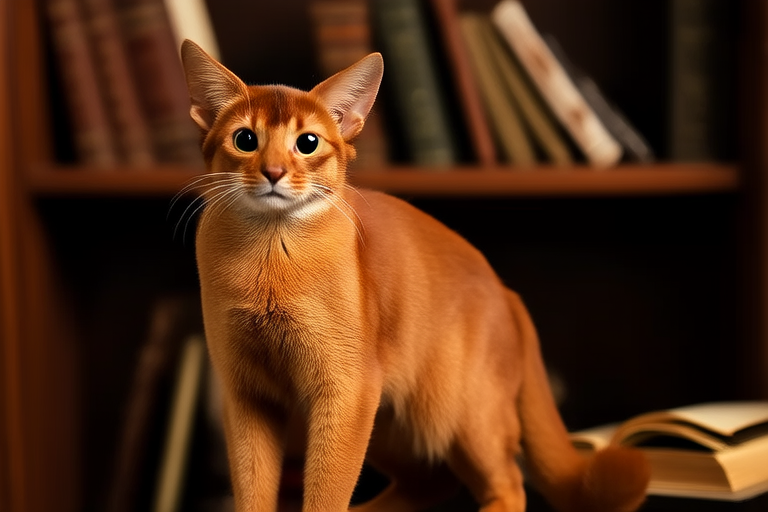
The Abyssinian’s physical appearance is one of its most distinguishing features. With its slender build, large ears, and almond-shaped eyes, the breed exudes elegance and grace. The most notable characteristic of the Abyssinian is its coat, which is short, dense, and ticked. Each hair shaft is banded with different colors, creating a rich, multi-tonal effect. Common colors include ruddy (a warm, reddish-brown), blue (a cool, grayish-blue), fawn (a soft, beige), and cinnamon (a warm, reddish-brown).
The ticked coat pattern is believed to have evolved as a form of camouflage, allowing the cats to blend seamlessly into their surroundings. This adaptation would have been particularly advantageous in the wild, where survival often depended on stealth and agility. Today, the ticked coat continues to be a defining feature of the Abyssinian, setting it apart from other breeds.
Besides its coat, the Abyssinian’s large, expressive eyes and alert demeanor contribute to its striking appearance. These features, combined with its lithe body and high energy levels, make the Abyssinian an ideal companion for active households. The breed’s playful nature and intelligence further enhance its appeal, making it a beloved member of many families.
Rise in Popularity and Significance in Cat Shows
The Abyssinian’s rise in popularity can be traced back to the late 19th century, when the breed began to appear in cat shows across Europe and North America. Initially, the Abyssinian faced competition from other exotic breeds, such as the Siamese and Persian. However, its unique appearance and engaging personality quickly won over judges and spectators alike.
The first recorded Abyssinian cat show took place in England in 1871, where the breed was exhibited alongside other rare and exotic felines. Since then, the Abyssinian has become a regular fixture in cat shows around the world. Its consistent presence in these events has helped to solidify its reputation as one of the most beautiful and intelligent cat breeds.
Over the years, the Abyssinian has achieved numerous accolades in cat shows, earning titles such as Best of Breed, Best of Opposite Sex, and even Best in Show. These achievements have not only boosted the breed’s popularity but have also contributed to the growth of the cat fancy community. Today, the Abyssinian is recognized by major cat registries, including the Cat Fanciers’ Association (CFA) and The International Cat Association (TICA).
Current Status and Conservation Efforts
Despite its long history and enduring popularity, the Abyssinian faces challenges that threaten its future. Like many purebred cats, the Abyssinian is susceptible to certain health issues, including Periodontal Disease, Renal Amyloidosis, and Hypertrophic Cardiomyopathy. To address these concerns, breeders and veterinarians work together to develop breeding programs that prioritize health and genetic diversity.
Conservation efforts focus on maintaining the breed’s unique genetic makeup while minimizing the risk of inherited diseases. This involves careful selection of breeding pairs and regular health screenings. Additionally, organizations dedicated to the preservation of rare and endangered cat breeds play a crucial role in promoting responsible breeding practices and raising awareness about the importance of genetic diversity.
The Abyssinian’s current status reflects both its resilience and the ongoing commitment of its supporters. While challenges remain, the breed continues to thrive in homes and cat shows around the world. By embracing the lessons of the past and looking towards the future, the Abyssinian’s legacy as a cherished and admired breed will endure for generations to come.
In conclusion, the Abyssinian cat is a testament to the enduring power of history and genetics. From its mysterious origins to its present-day prominence, the breed has captured the imagination of cat lovers everywhere. Its unique physical characteristics, coupled with its playful and intelligent nature, make it a beloved member of many households. As we continue to learn more about the breed’s history and genetics, we can appreciate the intricate web of factors that have shaped its evolution. Whether you are a seasoned cat fancier or simply curious about the world of felines, the Abyssinian offers a fascinating glimpse into the rich tapestry of our shared history.
