The Thrilling Adventures of the Water Monitor: Exploring Its Unique Traits and Behaviors
The water monitor (Varanus salvator) is one of the most fascinating creatures in the reptilian world. Known for its remarkable adaptability and unique behaviors, this large lizard thrives in diverse environments across Southeast Asia. From bustling mangrove forests to serene freshwater lakes, the water monitor has carved out a niche for itself as a versatile predator and scavenger.
Geographical Distribution and Habitat Preferences
The water monitor is native to the tropical regions of Southeast Asia, where it can be found from India and Sri Lanka through Myanmar, Thailand, Malaysia, Indonesia, and the Philippines. It has also been introduced to parts of Florida in the United States, likely due to escaped or released pets. The water monitor’s habitat preference varies widely but generally includes areas with abundant water sources such as rivers, lakes, swamps, and mangroves. These environments provide the necessary conditions for the water monitor to thrive, offering both aquatic and terrestrial spaces for hunting, resting, and breeding.
Physical Characteristics
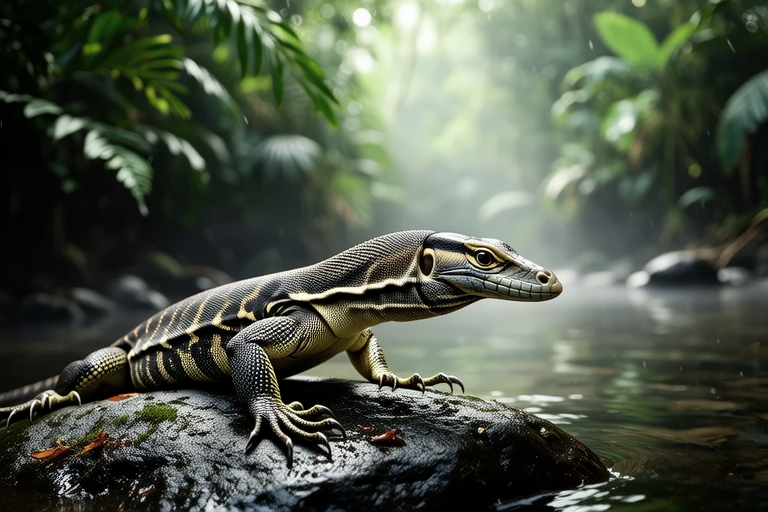
The water monitor is an impressive sight, with a robust body and a long, powerful tail that aids in swimming and balance. Adults can reach lengths of up to three meters, making them one of the largest lizards in the world. Their skin is covered in scales that are tough and durable, providing protection against predators and harsh environmental conditions. The water monitor’s coloration ranges from brown to grey, often with dark stripes or spots, which help it blend into its surroundings. This camouflage is crucial for both hunting and avoiding detection by larger predators.
One of the most notable adaptations of the water monitor is its ability to breathe underwater for extended periods. Unlike many other lizards, the water monitor has a specialized lung structure that allows it to extract oxygen from water. Additionally, it can absorb some oxygen through its skin and mouth lining, further enhancing its aquatic capabilities. This adaptation makes the water monitor an efficient swimmer and diver, capable of pursuing prey and escaping danger in both freshwater and saltwater environments.
Diet and Hunting Techniques
The water monitor is an opportunistic feeder, meaning it will eat almost anything it can catch or find. Its diet consists mainly of fish, frogs, crabs, insects, birds, and small mammals. The water monitor uses its keen sense of smell to locate prey, often detecting movement or scent from a considerable distance. Once a potential meal is identified, the water monitor employs various hunting techniques depending on the type of prey.
For aquatic prey, the water monitor may dive into the water and swim swiftly to catch fish or crabs. Its strong jaws and sharp teeth enable it to grasp and hold onto slippery prey. On land, the water monitor stalks its prey stealthily, using its speed and agility to pounce on unsuspecting animals. It may also scavenge carrion when available, contributing to its role as a vital part of the ecosystem.
Social Interactions and Communication Methods
Despite their solitary nature, water monitors do engage in social interactions under certain circumstances. Males, in particular, exhibit territorial behavior during the mating season, competing for access to females. These interactions involve displays of dominance, such as head-bobbing, tail-lashing, and sometimes physical confrontations. While these behaviors are primarily observed during the breeding period, they highlight the complex social dynamics within the species.
Communication among water monitors is primarily non-verbal, relying on visual cues and chemical signals. They use their tongues to detect pheromones, which play a crucial role in identifying potential mates and rivals. Additionally, water monitors may produce low-frequency vibrations to communicate over short distances, although more research is needed to fully understand the extent of their communication methods.
Reproductive Habits
The water monitor reaches sexual maturity at around five years of age. During the breeding season, typically between June and August, males compete fiercely for the attention of females. Once a male successfully courts a female, mating occurs, and the female subsequently lays her eggs. She selects a nesting site, usually in sandy soil near water bodies, where she can dig a burrow to deposit her clutch of 20 to 60 eggs.
The incubation period lasts approximately six to eight months, after which the hatchlings emerge. These juveniles are miniature versions of their parents, already equipped with the skills and adaptations necessary for survival. However, they face numerous challenges, including predation from larger animals and competition for resources. Despite these obstacles, many water monitors manage to grow into adults and continue the cycle of life.
Conservation Status, Threats, and Protection Efforts
The International Union for Conservation of Nature (IUCN) currently lists the water monitor as a species of least concern, indicating that it is not facing immediate extinction risks. However, several factors threaten the long-term survival of this remarkable creature. Habitat destruction, primarily due to deforestation and urbanization, poses a significant challenge to the water monitor’s way of life. As human populations expand and natural habitats shrink, the water monitor finds itself increasingly displaced.
Additionally, the illegal pet trade and hunting for meat and skins contribute to declines in wild populations. In some regions, water monitors are hunted for their meat, which is considered a delicacy in certain cultures. Their skin is also prized for leather goods, driving poaching activities. To address these threats, various conservation organizations and local communities are working together to protect the water monitor.
Efforts include habitat restoration projects, education programs aimed at reducing demand for wild-caught specimens, and stricter enforcement of wildlife protection laws. By raising awareness about the importance of preserving this species and its ecosystem, conservationists hope to ensure the continued existence of the water monitor for future generations.
In conclusion, the water monitor is a marvel of evolution, perfectly adapted to its environment and capable of thriving in diverse habitats. Its unique traits and behaviors make it an intriguing subject for study and admiration. By understanding and appreciating the water monitor, we can better appreciate the complexity and beauty of the natural world and work towards ensuring its survival for years to come.
