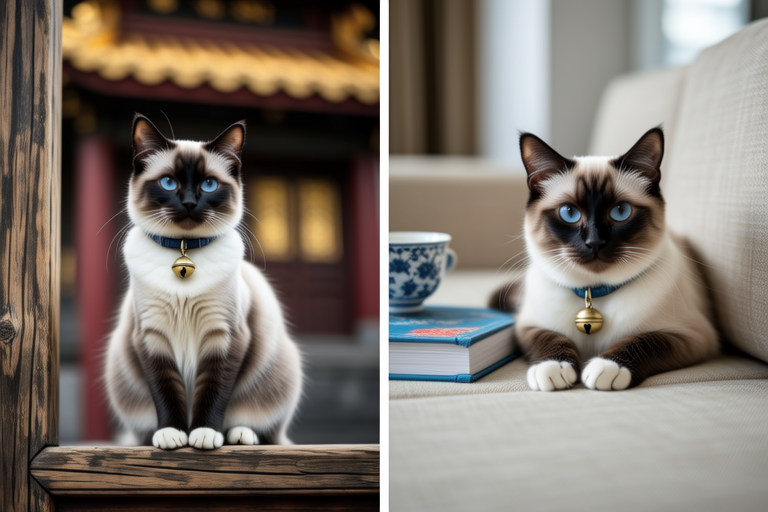
The Historical Journey of Siamese Cats from Temples to Households
The Siamese cat, known for its striking blue almond-shaped eyes, sleek coat, and vocal nature, has captivated humans for centuries. Originating in Siam (modern-day Thailand), these cats have a rich history intertwined with temples, royalty, and eventually, households around the world. This article delves into the historical origins of Siamese cats in temples, their roles, and how they transitioned to becoming beloved household pets. We will explore key characteristics, their interaction with humans, popular myths surrounding them, notable changes in their physical appearance and temperament over time, and famous Siamese cats or instances where they played significant roles in literature, film, or real life. Additionally, we provide insights into the care and health needs specific to this breed for modern owners and offer predictions or observations about the future of Siamese cats in the pet world.
Historical Origins in Temples
The Siamese cat’s history is deeply rooted in the temples of ancient Siam. These graceful felines were highly revered and often associated with royalty and religious ceremonies. They were believed to possess mystical powers and were thought to be the guardians of temples, protecting sacred relics and ensuring the safety of the premises. The cats’ unique appearance and intelligence made them ideal companions for monks and priests who lived in these holy places.
Siamese cats were often depicted in ancient Thai manuscripts and paintings, further emphasizing their importance in Thai culture. The cats were not only admired for their beauty but also for their loyalty and affection towards humans. Their presence in temples symbolized protection, wisdom, and good fortune.
Transition to Household Pets
The transition of Siamese cats from temple guardians to household pets began in the late 19th century when several Siamese cats were exported to Europe and North America. The first recorded export was in 1878 when a Siamese cat named Pho was presented as a gift to the sister of the British Consul General in Bangkok. This event marked the beginning of the breed’s popularity outside of Thailand.
Initially, Siamese cats were considered exotic and expensive pets owned by the elite. However, as more people became aware of their unique charm and personality, the demand for Siamese cats grew. By the mid-20th century, they had become one of the most popular cat breeds in the Western world. Today, Siamese cats are cherished by millions of families worldwide for their intelligence, affectionate nature, and striking appearance.
Key Characteristics
Siamese cats are known for their distinctive physical features, including their short, fine coat, which is typically cream or fawn on the body and darker at the points (ears, face, paws, and tail). Their blue almond-shaped eyes and slender, muscular build contribute to their elegant appearance. In terms of temperament, Siamese cats are highly social, intelligent, and vocal, often communicating their needs and desires through meows and other sounds.
Siamese cats are known for their strong bond with their human companions, often seeking attention and affection. They enjoy interactive play and are curious about their surroundings. Their intelligence makes them quick learners, and they can even be trained to perform tricks or respond to commands. However, their high energy levels and need for mental stimulation mean that they require plenty of attention and engagement from their owners.
Interaction with Humans
Siamese cats are known for their strong bond with humans and are often referred to as “dog-like” in their behavior. They are highly social and enjoy spending time with their owners, following them around the house and participating in daily activities. Siamese cats are also known for their vocal nature, often meowing or making other sounds to communicate with their humans. They may even engage in conversations, responding to their owner’s speech.
Siamese cats are also known for their intelligence and problem-solving abilities. They are curious creatures and enjoy exploring their environment, often finding ways to open doors or cabinets to access areas they are not supposed to enter. Their playful nature and love for toys make them excellent companions for families with children or other pets.
Popular Myths Surrounding Siamese Cats
One popular myth about Siamese cats is that they originated from a royal crossbreeding program between a seal-point Siamese and a tabby. While there is no evidence to support this claim, it highlights the fascination and mystery surrounding the breed. Another myth is that Siamese cats have a genetic predisposition to certain health issues, such as heart disease and respiratory problems. While it is true that some Siamese cats may be prone to certain health conditions, proper care and regular veterinary check-ups can help prevent or manage these issues.
Notable Changes in Physical Appearance and Temperament Over Time
Over the years, selective breeding has led to significant changes in the physical appearance and temperament of Siamese cats. Early Siamese cats had a more moderate build, with a rounder head and fuller body. However, breeders began to focus on producing cats with a more slender, elongated body and a wedge-shaped head, leading to the development of the modern Siamese cat.
In addition to physical changes, selective breeding has also influenced the temperament of Siamese cats. Some breeders have focused on producing cats with a more docile and less vocal temperament, while others have emphasized retaining the breed’s original intelligence and curiosity. As a result, there is now a wide range of temperaments within the Siamese breed, depending on the lineage and breeding practices of individual cats.
Famous Siamese Cats
Siamese cats have appeared in various forms of media throughout history, including literature, film, and television. One of the most famous Siamese cats in literature is Cheshire Cat from Lewis Carroll’s “Alice’s Adventures in Wonderland.” Although not explicitly described as a Siamese cat, many illustrations depict the Cheshire Cat with the characteristic blue eyes and point coloration of the breed.
Siamese cats have also appeared in numerous films and television shows, including “The Aristocats,” “Lady and the Tramp,” and “All Creatures Great and Small.” In real life, Siamese cats have been owned by celebrities and politicians, including former U.S. President Richard Nixon and actress Elizabeth Taylor. These cats have also been featured in advertising campaigns and fashion shoots, further cementing their status as iconic pets.
Care and Health Needs
Siamese cats are generally healthy cats, but like all breeds, they may be prone to certain health issues. Regular veterinary check-ups, a balanced diet, and proper grooming are essential for maintaining their health and well-being. Siamese cats should be fed a high-quality cat food that meets their nutritional needs, and they should have access to fresh water at all times.
Grooming is an important aspect of caring for Siamese cats, as their short, fine coats require minimal maintenance. However, they should be brushed regularly to remove loose hair and prevent matting. Siamese cats also benefit from regular dental care, including brushing their teeth and providing dental treats or toys. Owners should also ensure that their Siamese cats have access to appropriate scratching posts and toys to keep them mentally and physically stimulated.
Predictions and Observations About the Future of Siamese Cats
As the pet industry continues to evolve, it is likely that Siamese cats will remain popular among cat lovers for generations to come. Advances in breeding techniques and genetic testing may lead to the development of new variations of the breed, further expanding the range of physical and temperamental traits available. Additionally, increased awareness of the importance of responsible breeding and animal welfare may lead to improvements in the overall health and well-being of Siamese cats.
As more people adopt Siamese cats as pets, it is important for owners to be aware of the breed’s unique needs and characteristics. By providing proper care and attention, owners can ensure that their Siamese cats live long, healthy, and happy lives. With their striking appearance, intelligence, and affectionate nature, Siamese cats are sure to continue captivating the hearts of cat lovers for years to come.
