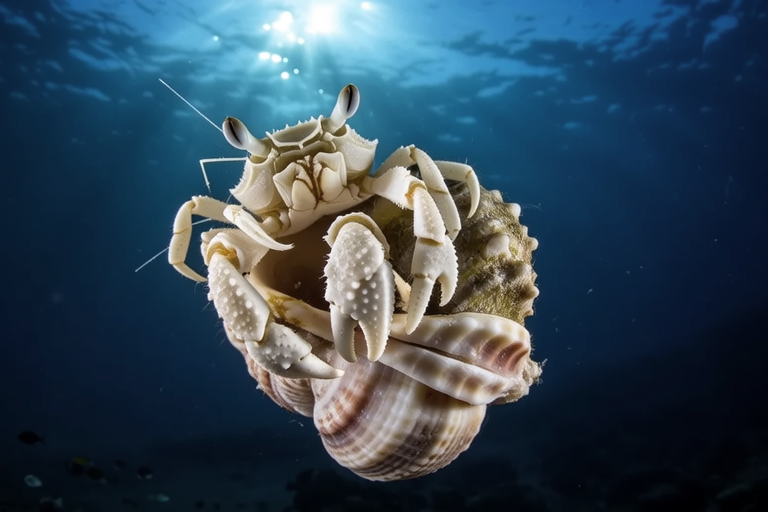
The Intricate World of Pea Crabs and Their Marine Hosts
Pea crabs (Pinnotheres) are small, delicate crustaceans that have evolved an extraordinary symbiotic relationship with bivalve mollusks such as clams and mussels. This relationship, known as endosymbiosis, is characterized by the crabs living within the protective shells of their hosts, creating a mutually beneficial arrangement that has fascinated scientists and marine enthusiasts alike.
A Unique Partnership
The life cycle of pea crabs begins when larvae are released into the water column. They must locate and enter a suitable host to survive. Once inside, they undergo metamorphosis, transforming from free-swimming planktonic forms into the sedentary, adult form. The host provides shelter, protection from predators, and a steady supply of nutrients, which the crab extracts by filtering the host’s food or scavenging within its gills. In return, the pea crab may offer some protection against parasitic infections or help in the host’s reproduction by cleaning away dead tissue.
Evolutionary Adaptations
Pea crabs have developed several remarkable adaptations to thrive in this intimate relationship. Their small size allows them to fit comfortably within the confines of their hosts’ shells. Additionally, their flattened bodies enable them to move easily through narrow spaces and avoid being crushed by the closing valves of the bivalve. These crabs also possess specialized appendages called setae, which help them anchor themselves securely within the host’s mantle cavity. Recent research has highlighted the genetic adaptations of pea crabs, showing that they have evolved specific genes to cope with the unique environmental conditions within their hosts.
Impact on Host Health
The relationship between pea crabs and their hosts can vary widely depending on factors such as the species involved and the density of the crab population within the host. In many cases, the presence of pea crabs is benign or even beneficial to the host, providing defense against parasitic infections and helping to maintain the host’s reproductive organs. However, in some instances, the crabs can cause harm. High densities of pea crabs can lead to reduced growth rates in their hosts, and in extreme cases, may even result in the death of the bivalve. Understanding the balance between these two organisms is crucial for assessing the overall health of marine ecosystems.
Behavioral Observations
Observing pea crabs in their natural habitat is challenging due to their concealed lifestyle. However, studies conducted in controlled laboratory settings have provided valuable insights into their behavior. Researchers have noted that pea crabs exhibit distinct mating behaviors, with males often guarding females during the breeding season. Additionally, the crabs have been observed actively participating in the host’s feeding process, sometimes manipulating the host’s siphons to increase the flow of food particles. These observations suggest that the relationship between pea crabs and their hosts is more complex than initially thought.
Ecological Significance
The symbiotic relationship between pea crabs and their hosts plays a significant role in marine ecosystems. By acting as both consumers and decomposers, pea crabs contribute to nutrient cycling within the ecosystem. Furthermore, their presence can influence the dynamics of predator-prey interactions, potentially altering the structure of entire communities. For example, the presence of pea crabs may deter certain parasites from attacking their hosts, thereby reducing the overall prevalence of these pathogens within the ecosystem. This, in turn, can have cascading effects on other species that rely on the same resources.
Recent Research Findings
Advancements in molecular biology and genetics have opened new avenues for studying pea crabs and their hosts. Recent research has focused on understanding the genetic mechanisms underlying the symbiotic relationship, including the exchange of genetic material between the two organisms. Scientists have discovered that pea crabs possess genes that are specifically adapted to their symbiotic lifestyle, allowing them to thrive in the unique environment provided by their hosts. Additionally, researchers have used advanced imaging techniques to gain unprecedented insights into the internal anatomy of pea crabs and their hosts, revealing intricate details about their interaction.
Conclusion
The symbiotic relationship between pea crabs and their marine hosts represents one of nature’s most fascinating examples of mutualism. Through their close association, these tiny crustaceans have evolved remarkable adaptations that allow them to thrive within the protective confines of their hosts. While the relationship can sometimes be harmful to the host, it generally benefits both parties, contributing to the overall health and stability of marine ecosystems. As our understanding of these relationships continues to grow, so too will our appreciation for the complexity and beauty of life in the ocean.
