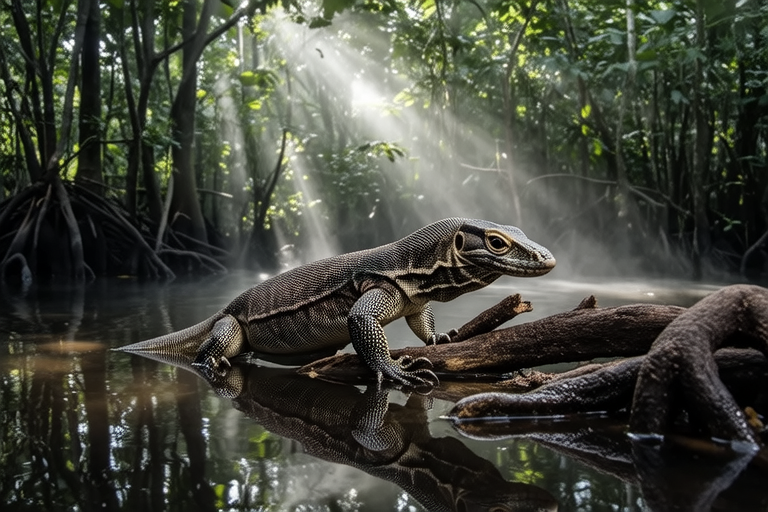
Top 10 Fascinating Behaviors You Didn’t Know About Water Monitors
The water monitor (Varanus salvator) is one of the largest lizards in the world, known for its remarkable adaptability and intriguing behaviors. Found primarily in Southeast Asia, this species plays a crucial role in its ecosystem, acting as both predator and prey. Understanding the water monitor’s behavior is essential not only for appreciating its ecological significance but also for conservation efforts aimed at protecting this magnificent creature. This article delves into ten fascinating behaviors that highlight the complexity and uniqueness of the water monitor.
1. Exceptional Swimmers
Water monitors are adept swimmers, capable of traversing long distances in search of food or mates. They can dive up to 45 meters deep and stay submerged for over 30 minutes, thanks to their efficient lung capacity and streamlined bodies. Their tails act as powerful rudders, propelling them through water with ease. This aquatic prowess is vital for their survival, allowing them to explore vast areas of their habitat and access food sources that may be out of reach for other terrestrial predators.
2. Stealthy Hunters
Water monitors employ a variety of hunting strategies, often relying on stealth and speed. They are opportunistic feeders, consuming anything from insects and fish to small mammals and birds. One of their most impressive hunting techniques involves ambushing prey from underwater. By lying motionless at the bottom of rivers or ponds, they wait for unsuspecting animals to approach. Once within striking distance, they launch themselves with lightning speed, catching their prey off guard. This method underscores the lizard’s adaptability and resourcefulness in securing meals.
3. Versatile Diet
Despite being carnivorous, water monitors have a remarkably diverse diet. Their menu includes crabs, mollusks, eggs, and even carrion. This dietary flexibility allows them to thrive in various environments, from coastal mangroves to inland forests. Scientific studies suggest that their ability to consume such a wide range of foods contributes to their longevity and widespread distribution. Understanding their dietary habits helps researchers predict how changes in their environment might affect their survival.
4. Social Interactions
Contrary to popular belief, water monitors are not solitary creatures. They engage in complex social behaviors, particularly during mating season. Males will compete for dominance, often engaging in physical confrontations that involve biting and wrestling. These interactions are critical for establishing hierarchies and ensuring genetic diversity within populations. Additionally, females may form temporary bonds with males, leading to cooperative breeding behaviors that increase offspring survival rates.
5. Nesting Behavior
Female water monitors are meticulous nest builders, creating burrows in which they lay their eggs. These nests are carefully constructed to protect the eggs from predators and environmental hazards. The mother remains close to the nest site for several days after laying her eggs, guarding them against potential threats. Interestingly, the temperature of the nest affects the sex of the hatchlings—a phenomenon known as temperature-dependent sex determination. This behavior highlights the intricate balance between maternal care and environmental factors in reptile reproduction.
6. Camouflage Techniques
Water monitors possess remarkable camouflage abilities, blending seamlessly into their surroundings. Their scales are covered in a network of tiny grooves that scatter light, making them appear duller and less reflective. This adaptation helps them avoid detection by both prey and predators. In addition, their coloration can vary depending on their habitat, ranging from dark brown in forested areas to lighter shades in more open environments. This chameleon-like quality enhances their chances of survival in diverse ecosystems.
7. Thermoregulation
Like many reptiles, water monitors rely on external heat sources to regulate their body temperature. They bask in the sun to warm up and retreat to shaded areas when overheated. This behavior is crucial for maintaining optimal metabolic functions. Studies have shown that water monitors are highly attuned to changes in ambient temperature, adjusting their activity levels accordingly. Their ability to thermoregulate efficiently contributes to their success as adaptable species in various climates.
8. Communication Through Scent
Water monitors communicate using chemical signals, leaving scent marks along their paths. These pheromones convey information about territory boundaries, reproductive status, and individual identity. Male monitors are particularly active in marking their territories, especially during mating season. This olfactory communication system is vital for coordinating social interactions and avoiding unnecessary conflicts. Research indicates that water monitors have a keen sense of smell, which plays a significant role in their daily lives.
9. Adaptation to Urban Environments
In recent years, water monitors have adapted to living in urban areas, thriving alongside human settlements. They exploit waste dumps and gardens as new sources of food, demonstrating their resilience and adaptability. However, this proximity to humans poses challenges, including increased risk of vehicle collisions and conflicts with local residents. Conservationists are working to develop strategies that mitigate these risks while preserving the water monitors’ presence in urban landscapes.
10. Longevity and Growth
Water monitors have an exceptionally long lifespan, often reaching over 20 years in the wild. They grow rapidly during their early years, reaching lengths of up to 2 meters in just a few years. This growth rate is attributed to their high-calorie diet and efficient metabolism. Understanding the growth patterns of water monitors provides valuable insights into their overall health and well-being, which is crucial for effective conservation management.
Conclusion: The Importance of Conservation
The water monitor’s unique behaviors and adaptations make it a fascinating subject of study. From its exceptional swimming skills to its complex social interactions, each aspect of its life reveals the intricate balance of nature. As human activities continue to impact natural habitats, it becomes increasingly important to understand and protect these creatures. By studying the water monitor, we gain invaluable knowledge about biodiversity and ecological systems. This understanding is vital for developing conservation strategies that ensure the survival of this remarkable species and the ecosystems it inhabits.
