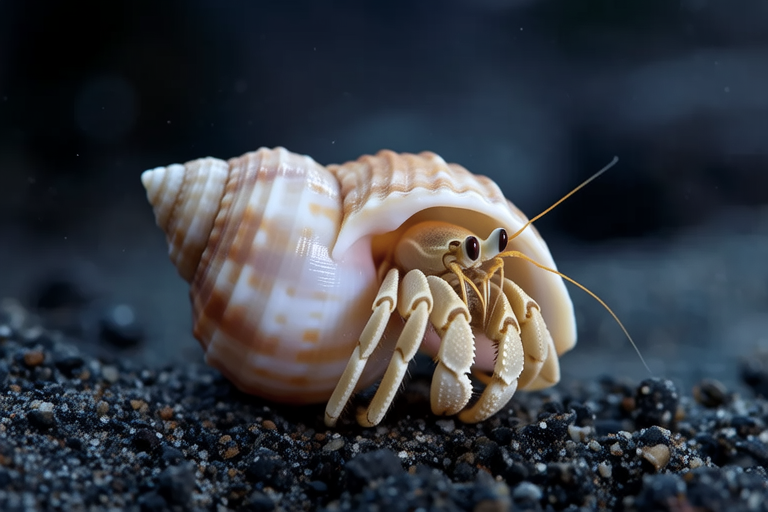
Crabby Coexistence: How Pea Crabs Thrive Inside Their Mollusk Homes
In the vast ocean, there exist unique partnerships that challenge our understanding of nature’s balance. One such remarkable relationship is that between pea crabs and their mollusk hosts. These tiny crustaceans, barely larger than a thumbnail, have evolved to live within the confines of bivalves, snails, and other mollusks. This article delves into the fascinating world of pea crabs, exploring how these creatures find and enter their hosts, the adaptations they undergo, and the benefits they provide to their hosts. We will also discuss the ecological significance of this relationship and potential threats to their coexistence.
The Symbiotic Relationship
The relationship between pea crabs and their mollusk hosts is classified as commensalism, where one organism benefits while the other remains unaffected. For pea crabs, this arrangement offers protection from predators and a stable food source. The mollusks, in turn, benefit from the crabs’ presence, which can help clean out parasites and debris from their gills and mantle cavities.
How Pea Crabs Find and Enter Their Hosts
Pea crabs locate their hosts through chemical cues released by the mollusks. Once they detect these signals, the crabs must navigate through the water column to reach their intended home. Upon arrival, they use specialized appendages called chelipeds to pry open the host’s shell or mantle cavity. This process requires strength and precision, as the crabs must avoid damaging themselves or their future residence.
Adaptations for This Lifestyle
Once inside, pea crabs undergo significant physical changes to accommodate their new living space. Their bodies become flattened and elongated, allowing them to fit snugly within the confines of their host’s shell. Additionally, they develop reduced eyesight and enhanced sensory organs to compensate for their limited visibility within the enclosed environment. These adaptations enable the crabs to thrive in their unique habitat.
Diverse Species and Hosts
There are over 100 recognized species of pea crabs worldwide, each adapted to specific molluscan hosts. Some common hosts include oysters, scallops, mussels, clams, and various species of sea snails. Each species of pea crab has developed particular behaviors and physical traits suited to its chosen host. For instance, some pea crabs may attach themselves to the host’s gills, while others prefer the safety of the mantle cavity.
Benefits Provided to Hosts
In addition to protection from predators, pea crabs offer several benefits to their hosts. They consume parasites that could otherwise harm the mollusks, helping to maintain the health of both organisms. Furthermore, pea crabs play a role in cleaning the host’s internal environment by removing detritus and other organic matter. This mutualistic interaction fosters a healthier ecosystem for both parties involved.
Ecological Significance
The relationship between pea crabs and their mollusk hosts contributes significantly to marine ecosystems. By maintaining the health of their hosts, pea crabs indirectly support the broader marine community. Healthy populations of bivalves and other mollusks filter large quantities of seawater, improving water quality and providing essential nutrients for other organisms. Thus, pea crabs play a vital role in sustaining the delicate balance of life in coastal waters.
Threats to Coexistence
Despite their importance, pea crabs and their hosts face numerous challenges. Overfishing, pollution, and climate change pose serious threats to both groups. Changes in water temperature and chemistry can disrupt the chemical signaling used by pea crabs to locate their hosts, making it harder for them to establish successful relationships. Additionally, human activities that damage or remove habitats can reduce the availability of suitable hosts, further jeopardizing this unique partnership.
Conclusion
The symbiotic relationship between pea crabs and their mollusk hosts exemplifies the intricate web of life found in marine environments. Through careful adaptation and cooperation, these tiny crustaceans have carved out a niche for themselves within the shells of their hosts, benefiting both parties in the process. As we continue to explore and understand these relationships, it becomes increasingly clear that protecting these delicate ecosystems is crucial for preserving the biodiversity of our oceans.
