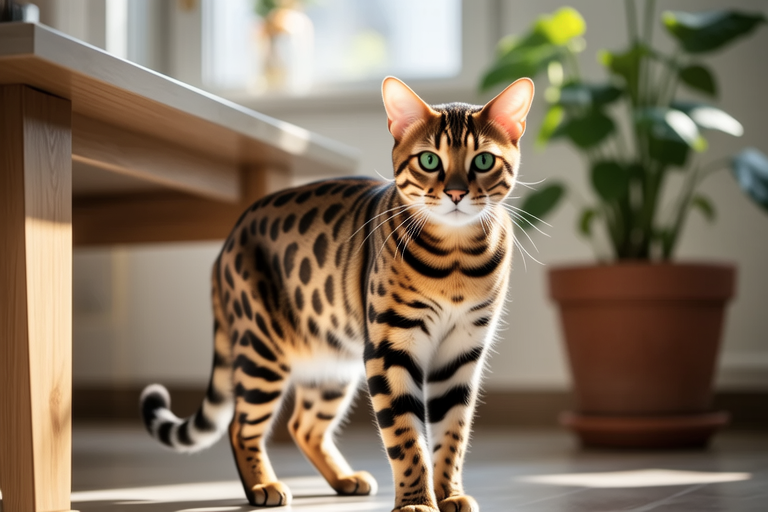
From Jungle to Living Room: How Bengal Cats Conquered Hearts Worldwide
The Bengal cat, a striking feline breed known for its sleek, spotted coat and playful demeanor, has captured the hearts of millions around the globe. This article delves into the origins, unique characteristics, and fascinating journey of the Bengal cat from its wild ancestors to its place in modern-day living rooms.
Origins and Lineage
Bengal cats trace their roots back to the Asian leopard cat (ALC), a small wild cat native to parts of Asia. The first known attempt at crossing the ALC with domestic cats occurred in the mid-20th century when Dr. Willard Centerwall bred these two species to study genetic resistance to feline leukemia virus. However, it was Jean Mill, an American breeder, who truly paved the way for the modern Bengal cat.
Jean Mill began her breeding program in the 1970s, aiming to create a domestic cat that retained the wild beauty of the ALC while being gentle and affectionate towards humans. Her efforts resulted in a breed that combines the best traits of both wild and domestic cats, making Bengal cats one of the most popular exotic-looking breeds today.
Unique Characteristics
Bengal cats are easily distinguishable by their stunning coats, which come in various patterns and colors. Their fur often features rosettes or marbling, reminiscent of their wild relatives. The breed’s sleek, muscular build further accentuates their agility and grace. Bengals are highly intelligent and curious, often displaying behaviors similar to their wild ancestors, such as playing in water or climbing trees.
Temperament-wise, Bengal cats are social, active, and playful. They thrive on interaction with their human companions and can form strong bonds with them. Despite their wild heritage, Bengal cats are generally friendly and adaptable, making them excellent pets for families or individuals looking for an interactive companion.
History of Breeding
The development of the Bengal cat as a distinct breed involved several key figures and milestones. Jean Mill played a pivotal role in establishing the breed’s foundation stock through selective breeding. She worked tirelessly to ensure that each generation of Bengal cats inherited desirable traits, such as good health, friendly dispositions, and vibrant coats.
In the 1980s, the International Cat Association (TICA) recognized the Bengal cat as a legitimate breed, paving the way for its acceptance in the wider cat fancy community. Since then, Bengal cats have participated in numerous cat shows and competitions, showcasing their elegance and charm.
Famous Owners and Unique Behaviors
Bengal cats have been owned by many notable figures, including celebrities and politicians. One such owner is actor Harrison Ford, who adopted a Bengal cat named “Viper” in 2014. Viper quickly became a beloved member of the family and often accompanied Ford during public appearances.
Beyond celebrity ownership, Bengal cats exhibit fascinating behaviors that set them apart from other domestic breeds. Their love for water is particularly noteworthy; many Bengals enjoy splashing in shallow pools or running faucets. Additionally, their curiosity leads them to explore every corner of their environment, making them ideal candidates for puzzle toys and interactive games.
Adaptation to Domestic Life
Bengal cats have adapted remarkably well to domestic life, but this adaptation comes with its own set of challenges. Ensuring proper nutrition, mental stimulation, and physical activity is crucial for maintaining their overall health and happiness. Providing ample space for exercise and playtime helps prevent behavioral issues associated with boredom or frustration.
Another challenge faced by Bengal cat owners is managing their high energy levels. These cats require significant attention and engagement, which may be overwhelming for some households. However, with patience and dedication, Bengal cats can become loving and loyal companions.
Global Impact
The impact of Bengal cats on the pet industry cannot be overstated. Their popularity has spurred demand for quality breeding programs and ethical practices within the cat fancy community. Many breeders now prioritize health screening and responsible breeding techniques to produce healthy, happy cats.
Moreover, Bengal cats have influenced trends in cat fashion and accessories. From stylish collars to luxurious beds, products designed specifically for Bengal cats reflect their growing presence in popular culture. Their enduring appeal lies in their unique combination of wild allure and domestic charm, making them a favorite among cat enthusiasts worldwide.
Conclusion
From their origins as hybrids between Asian leopard cats and domestic cats to their current status as cherished pets, Bengal cats have come a long way. Their distinctive appearance, playful nature, and adaptability have earned them a special place in the hearts of cat lovers everywhere. As we continue to learn more about these remarkable creatures, it’s clear that Bengal cats will remain a beloved part of our lives for generations to come.
