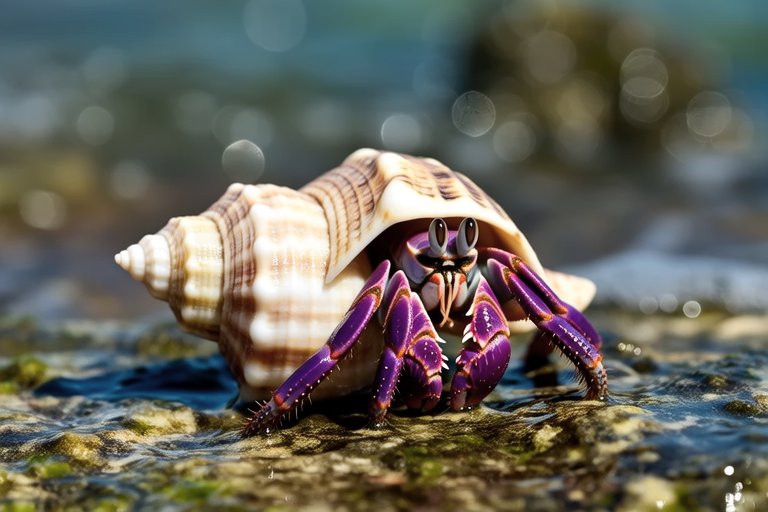
Hermit Crabs: Beyond Their Shells
Hermit crabs are fascinating creatures known for their unique relationship with seashells. However, there’s much more to these crustaceans than meets the eye. This article delves into the hidden behaviors and distinctive traits of hermit crabs, exploring their natural habitat, social interactions, feeding habits, and shell adaptation. We’ll also discuss their nocturnal activities, communication methods, and symbiotic relationships with other marine life. Additionally, we’ll highlight the challenges they face both in the wild and captivity, and emphasize the importance of conservation efforts.
Natural Habitat
Hermit crabs inhabit various environments, from tropical beaches to coral reefs and rocky shores. They thrive in areas rich in organic matter and diverse ecosystems that provide ample food sources. These crabs often reside near the water’s edge, where they can access both land and sea, making them versatile inhabitants of intertidal zones.
Social Interactions
Despite their solitary appearance, hermit crabs exhibit complex social behaviors. They communicate through chemical signals, touch, and even sound. When a hermit crab finds a suitable shell, it may engage in “shell fights” with others, exchanging or stealing shells. These interactions demonstrate their competitive nature and resourcefulness in adapting to their environment.
Feeding Habits
Hermit crabs are omnivorous scavengers, consuming algae, decaying plant material, and small animals. They play a crucial role in maintaining ecosystem balance by breaking down organic matter and recycling nutrients. In captivity, providing a varied diet is essential for their health and well-being.
Shell Adaptation
As hermit crabs grow, they must find larger shells to accommodate their expanding bodies. This process can be challenging, especially in crowded environments where suitable shells are scarce. The crabs carefully select shells based on size, shape, and weight, ensuring they provide adequate protection while allowing for mobility.
Nocturnal Activities
Hermit crabs are primarily nocturnal, emerging at night to forage for food and avoid predators. Their nocturnal behavior is an evolutionary adaptation that allows them to navigate their environment safely. During the day, they retreat into their shells or seek shelter under rocks and debris.
Communication Methods
In addition to chemical signals and touch, hermit crabs use sound to communicate. They produce clicking noises by rubbing their pincers together, a behavior known as stridulation. These sounds serve various purposes, such as attracting mates, warning off rivals, and coordinating group movements.
Symbiotic Relationships
Hermit crabs form mutually beneficial relationships with other marine life. For example, certain species of sea anemones attach themselves to the crabs’ shells, providing camouflage and protection from predators. In return, the anemones benefit from the crabs’ movement, which helps distribute their tentacles across a wider area. Other examples of symbiotic relationships include commensal relationships with fish and shrimp.
Challenges in the Wild
Hermit crabs face numerous challenges in their natural habitats, including climate change, pollution, and habitat destruction. Rising sea levels and increased ocean acidity threaten their survival, while pollution poses risks to their health and reproductive success. Conservation efforts are crucial to protecting these remarkable creatures and preserving the delicate balance of marine ecosystems.
Challenges in Captivity
Hermit crabs require specific conditions to thrive in captivity, including proper humidity, temperature, and substrate. Maintaining these conditions can be challenging for pet owners, leading to health issues and premature death. Providing a suitable environment, including a variety of shells and hiding places, is essential for their well-being.
Conservation Efforts
Several organizations and initiatives focus on conserving hermit crab populations and their habitats. These efforts include raising awareness about the importance of these creatures, promoting sustainable practices, and supporting research into their biology and ecology. By working together, we can help ensure the survival of hermit crabs and protect the ecosystems they call home.
Conclusion
Hermit crabs are fascinating creatures with unique behaviors and characteristics that make them stand out in the animal kingdom. From their complex social interactions to their nocturnal activities and symbiotic relationships, these crabs offer endless opportunities for exploration and discovery. By understanding their needs and challenges, we can better appreciate the role they play in our world and work towards their conservation.
