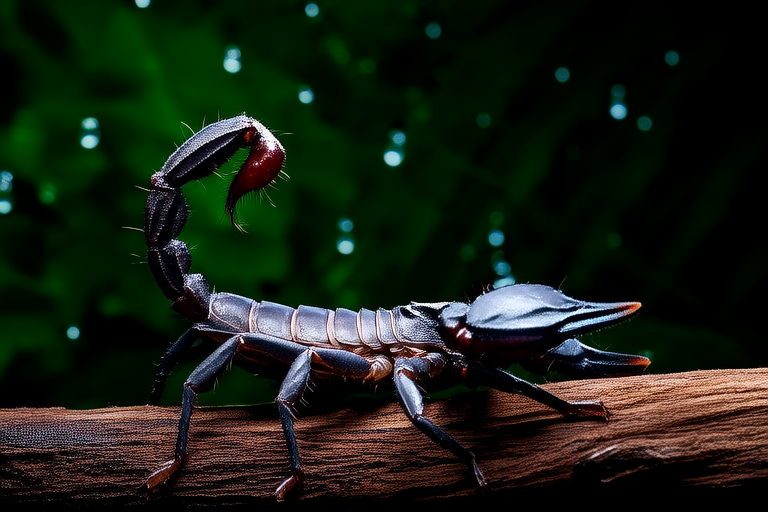
Unveiling the Secrets of Heterometrus Spinifer: A Close Encounter
In the dense jungles of Southeast Asia, where the air is thick with humidity and the sounds of nature echo through the canopy, there exists a creature that has long captured the imagination of explorers and scientists alike: the Heterometrus spinifer, commonly known as the Malaysian Red Forest Scorpion. This remarkable arachnid is a marvel of evolution, with a unique blend of physical attributes, behaviors, and ecological roles that make it one of the most fascinating creatures in the animal kingdom.
The Physical Marvels of Heterometrus Spinifer
The Heterometrus spinifer is easily recognizable by its striking appearance. It boasts a dark reddish-brown exoskeleton, which serves both as camouflage in its natural habitat and as a defense against predators. The scorpion’s body is segmented into three main parts: the prosoma (head), mesosoma (abdomen), and metasoma (tail). The prosoma houses the eyes, mouthparts, and venom glands, while the mesosoma contains the respiratory organs, heart, and digestive system. The metasoma, ending in the stinger, is the most distinctive feature of the Heterometrus spinifer, and it plays a crucial role in both hunting and self-defense.
The most notable physical characteristic of this scorpion is its spiny legs, from which it derives its name. These legs are equipped with sharp, curved claws called pedipalps, which the scorpion uses to grasp prey and defend itself. The pedipalps are highly sensitive, capable of detecting vibrations and chemical signals in the environment. This heightened sensory capability allows the Heterometrus spinifer to navigate its complex jungle habitat with ease.
The tail, or metasoma, is another key feature. It is long and slender, ending in a formidable stinger that delivers a potent venom. This venom is primarily used for subduing prey but can also serve as a defensive mechanism. Despite the intimidating appearance of the stinger, the venom of the Heterometrus spinifer is relatively mild compared to some other scorpion species, and while painful, it is rarely fatal to humans.
Habitat and Distribution
The Heterometrus spinifer is native to the tropical rainforests of Southeast Asia, particularly in Malaysia, Thailand, and Indonesia. It thrives in humid environments with plenty of hiding spots, such as under rocks, logs, and leaf litter. The scorpion prefers areas near water sources, as these provide both moisture and a variety of prey. Its nocturnal habits mean it spends most of the day hidden away, emerging only after dusk to hunt.
Within its habitat, the Heterometrus spinifer plays an important role in maintaining the balance of the ecosystem. As a predator, it helps control populations of insects and other small animals, contributing to the overall health of the forest. Additionally, its burrowing activities aerate the soil, promoting plant growth and nutrient cycling.
Behavior and Lifestyle
The lifestyle of the Heterometrus spinifer is largely solitary, with each individual staking out its own territory. During the day, the scorpion rests in a sheltered spot, often digging a shallow burrow or hiding beneath debris. At night, it becomes active, patrolling its territory in search of food. Its diet consists mainly of insects, spiders, and other small invertebrates, though it may occasionally take larger prey if the opportunity arises.
When hunting, the Heterometrus spinifer relies on its keen senses to detect potential prey. Once a target is identified, it will pounce, using its powerful pedipalps to grab and immobilize the victim. The venomous sting then comes into play, injecting toxins that paralyze the prey, allowing the scorpion to feed at leisure. After feeding, the scorpion will return to its resting place, where it may spend several days digesting its meal.
Reproduction among the Heterometrus spinifer is a fascinating process. Males engage in elaborate courtship dances to attract females, waving their pedipalps and performing intricate movements. Once mating occurs, the female carries the fertilized eggs internally for several months before giving birth to live young. The offspring, known as scorplings, remain attached to their mother for a short period, receiving protection until they are capable of fending for themselves.
Unique Traits and Myths
One of the most intriguing aspects of the Heterometrus spinifer is its ability to glow in the dark. When exposed to ultraviolet light, certain compounds in its exoskeleton produce a faint blue-green fluorescence. While the exact purpose of this phenomenon remains unclear, it is believed to play a role in communication or possibly in attracting prey. This trait adds an extra layer of mystery to the already enigmatic creature.
Over the years, many myths and misconceptions have arisen regarding the Heterometrus spinifer. One common myth is that the scorpion’s venom is deadly to humans, leading to unnecessary fear and avoidance. In reality, while the sting can be painful and cause localized swelling, it is not typically life-threatening. Another misconception is that scorpions always carry their tails over their backs, ready to strike. While this posture is common when threatened, the Heterometrus spinifer usually keeps its tail down when moving about normally.
The Role Within the Ecosystem
The Heterometrus spinifer is a vital component of its ecosystem, serving multiple roles that contribute to the overall health and stability of the environment. As a predator, it helps regulate insect populations, preventing outbreaks that could damage crops or spread disease. By controlling the number of herbivorous insects, it indirectly supports plant growth, ensuring a balanced food web.
In addition to its predatory role, the scorpion also interacts with other organisms in more subtle ways. For example, its burrowing activities help aerate the soil, improving drainage and promoting root development in nearby plants. Furthermore, the presence of scorpions can influence the behavior of other animals, as many species have evolved to avoid areas where these predators are known to lurk.
Safety Tips for Encounters with Humans
While encounters with the Heterometrus spinifer are rare, it is important to know how to handle them safely if they do occur. If you find yourself in close proximity to one of these scorpions, the best course of action is to remain calm and avoid sudden movements. Slowly back away, giving the scorpion space to retreat on its own. If you must move, do so cautiously, keeping your hands and feet clear of potential hiding spots.
If you are stung by a Heterometrus spinifer, seek medical attention immediately. While the venom is generally not life-threatening, it can cause significant pain and discomfort. Symptoms may include localized swelling, redness, and numbness, which can last for several hours. Applying ice to the affected area can help reduce inflammation, and over-the-counter pain relievers may alleviate discomfort.
To minimize the risk of encountering a scorpion, take precautions when exploring its natural habitat. Wear closed-toe shoes and long pants, and check your surroundings carefully before sitting or reaching into areas where scorpions might hide. If camping, shake out clothing and bedding before use, and store items off the ground to prevent accidental contact.
Conclusion
The Heterometrus spinifer is a truly remarkable creature, combining physical prowess, behavioral complexity, and ecological significance in a way that few other animals can match. From its glowing exoskeleton to its crucial role in the ecosystem, this scorpion continues to captivate and inspire those fortunate enough to encounter it. By understanding and respecting these magnificent creatures, we can better appreciate the intricate web of life that sustains our planet and work towards preserving the habitats that support them.
