How to Choose the Perfect Habitat for Your Leopard Gecko
Welcome to the world of reptile ownership! If you’re considering getting a leopard gecko as a pet, one of the most important decisions you’ll make is choosing the perfect habitat for them. This guide will walk you through everything you need to know about creating a suitable living environment for your new friend, from tank size to substrate choices and beyond.
Understanding Leopard Geckos’ Natural Environment
To provide the best care for your leopard gecko, it’s crucial to understand their natural habitat. Leopard geckos are native to the arid regions of Afghanistan, Pakistan, and parts of India. They thrive in dry, rocky environments with plenty of hiding spots and minimal water sources. By replicating these conditions in captivity, you can ensure that your pet remains healthy and happy.
Essential Habitat Components
Tank Size
The first step in setting up your leopard gecko’s home is choosing an appropriate tank size. A 20-gallon (75-liter) terrarium is sufficient for one adult leopard gecko. However, if you plan to house multiple geckos or want more space for decorations and accessories, consider upgrading to a larger enclosure. Always ensure there’s enough room for your gecko to move around comfortably without feeling cramped.
Heating and Lighting Requirements
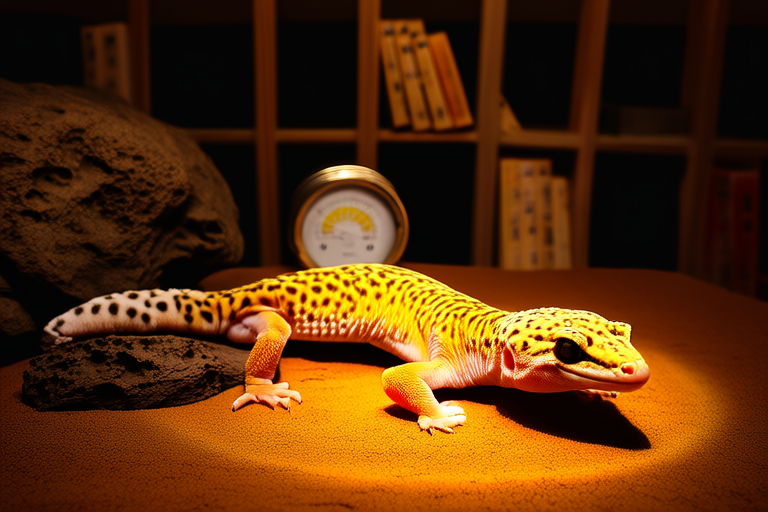
Leopard geckos are ectothermic animals, meaning they rely on external heat sources to regulate their body temperature. Providing proper heating is essential for their digestion, metabolism, and overall health. Install a heat lamp or ceramic heat emitter on one side of the tank to create a basking area. The temperature should range between 88°F (31°C) and 95°F (35°C) under the basking spot, while the cooler side of the tank should be around 75°F (24°C).
It’s also important to maintain consistent daytime temperatures throughout the tank. Use a thermostat to monitor and control the heat source, preventing overheating or cold spots. Leopard geckos don’t require UVB lighting for vitamin D synthesis since they produce it internally. However, providing a low-level UVB light during the day can help simulate natural daylight cycles and promote better overall health.
Substrate Options
Selecting the right substrate is vital for your leopard gecko’s comfort and safety. Avoid using loose substrates like sand, wood chips, or gravel, as they pose a choking hazard and can cause impaction if ingested. Instead, opt for safer alternatives such as paper towels, reptile carpet, or eco-friendly bedding products designed specifically for reptiles.
Eco-friendly bedding products made from coconut fiber or compressed paper pulp offer excellent moisture retention properties while being easy to clean and replace. These materials also mimic the soft, sandy surfaces found in leopard geckos’ natural habitats, making them ideal for creating a comfortable environment.
Hiding Spots and Decorations
Leopard geckos are nocturnal creatures that prefer to spend much of their time hiding. Providing ample hiding spots within the tank encourages natural behaviors and reduces stress. You can use commercially available hide boxes or DIY solutions like inverted plant pots with entrance holes cut into them. Ensure each hide box has a secure opening to prevent accidental trapping.
In addition to hiding spots, adding rocks, branches, and other decorations can enrich your gecko’s environment. These items serve dual purposes by offering climbing opportunities and enhancing the aesthetic appeal of the enclosure. When selecting decorations, choose non-toxic materials that won’t harm your pet if accidentally ingested.
Maintaining Hygiene and Ensuring Safety
Regular cleaning and maintenance are key to keeping your leopard gecko’s habitat clean and safe. Spot clean daily by removing any feces or uneaten food. Perform a thorough deep clean every two weeks, replacing the substrate and washing all accessories with mild soap and warm water. Rinse thoroughly and allow everything to dry completely before returning it to the tank.
Water dishes should be cleaned daily to prevent bacterial growth. Consider using a shallow dish that’s easy for your gecko to access but not deep enough for drowning. Some owners prefer to mist the tank walls lightly once or twice a week to increase humidity levels, especially during shedding periods. However, avoid over-misting, as excessive moisture can lead to respiratory issues.
To ensure safety within the habitat, inspect all equipment regularly for signs of wear or damage. Replace any damaged items immediately to prevent accidents. Additionally, keep the tank away from direct sunlight and drafts, which could cause fluctuations in temperature and humidity levels.
Conclusion
Creating the perfect habitat for your leopard gecko requires careful consideration of various factors, including tank size, heating and lighting requirements, substrate options, hiding spots, and decorations. By mimicking their natural environment and prioritizing hygiene and safety, you can ensure that your pet remains healthy and happy throughout its life. Remember to consult with a veterinarian or experienced reptile keeper if you have any questions or concerns about your gecko’s care needs.
