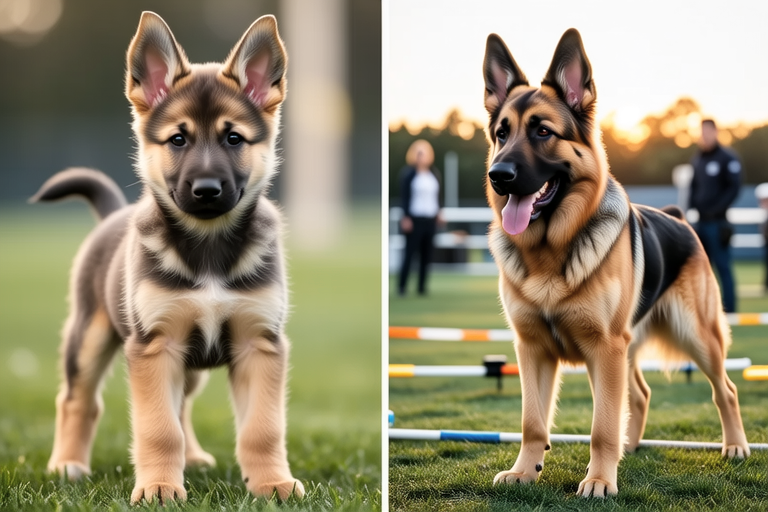
From Puppy to Protector: The Remarkable Journey of a German Shepherd
Few dog breeds evoke the same blend of admiration, respect, and affection as the German Shepherd. With their striking silhouette, piercing eyes, and unwavering presence, they stand as symbols of intelligence, loyalty, and courage. Revered in police stations, military bases, search-and-rescue missions, and family homes alike, the German Shepherd is more than just a pet—it’s a partner, protector, and cherished member of the household. But behind that powerful demeanor lies a journey as transformative as it is heartwarming: from a wobbly, curious puppy to a steadfast guardian whose instincts and devotion are honed through love, training, and trust.
Born in Germany at the turn of the 20th century, the breed was originally developed by Captain Max von Stephanitz for herding sheep—tasks requiring both mental acuity and physical endurance. What emerged was a dog of exceptional work ethic, keen awareness, and emotional depth. Today, with over a century of selective breeding, the German Shepherd remains one of the most versatile and respected working dogs in the world. Yet beneath their formidable reputation lies a gentle soul capable of deep affection—a duality that defines their remarkable character.
**Puppyhood: The Foundation of a Lifelong Bond**
The story of a German Shepherd begins not with a dramatic act of bravery, but with tiny paws, clumsy steps, and boundless curiosity. A newborn German Shepherd pup is a bundle of energy wrapped in soft, fluffy fur. Their eyes—often blue at birth—will gradually shift to the breed’s signature amber or dark brown, mirroring the intensity of their future gaze.
In those first few weeks, the focus is on survival and bonding. Puppies rely entirely on their mother for warmth, nourishment, and instinctive guidance. By three weeks old, they begin to open their eyes, take tentative steps, and interact with siblings. This early socialization phase is critical. It’s during this time that puppies start forming their foundational understanding of the world—the scent of humans, the sound of laughter, the feel of different textures.
“Early socialization isn’t just about teaching a puppy to sit or stay,” explains Sarah Lin, a certified dog behaviorist based in Oregon. “It’s about exposing them to a wide range of experiences—different people, sounds, surfaces, and environments—in a positive way. A well-socialized German Shepherd grows into a confident, adaptable adult who doesn’t react fearfully to new situations.”
By eight weeks, many German Shepherd puppies are ready to join their new families. This transition is delicate. A sudden change in environment can cause stress, so responsible owners ensure a calm, structured introduction. At home, routines matter: consistent feeding times, safe play spaces, and gradual exposure to household noises help ease the adjustment.
Training begins subtly. Simple commands like “sit,” “stay,” and “come” are introduced using positive reinforcement techniques—treats, praise, and play. These early lessons aren’t just about obedience; they’re about building communication between dog and human. German Shepherds thrive on mental challenges, so puzzle toys, scent games, and interactive training sessions become staples of their daily life.
**Adolescence: The Spark of Purpose**
As German Shepherds enter adolescence—typically between six and twelve months—they undergo a transformation that mirrors their growing physical strength. Their bodies elongate, muscles develop, and their confidence swells. This stage is often marked by increased independence, testing boundaries, and a surge in protective instincts.
It’s also when their true potential begins to shine. German Shepherds are naturally alert, observant, and eager to please. They quickly grasp complex tasks and respond well to structured training. For owners committed to shaping their dog’s development, this is the ideal window to introduce advanced obedience, agility exercises, and specialized skills.
Veteran K-9 handler James Reed, who served with the Los Angeles Police Department for 14 years, recalls his first German Shepherd partner: “I remember walking into the station with him at nine months old—still a bit gangly, but already scanning the room like he knew his job. We spent hours training together: tracking scents, door breaches, distraction handling. He wasn’t just learning commands—he was learning to think like a cop.”
This period is crucial not only for training but also for managing behavioral shifts. Adolescence can bring defiance, over-exuberance, or even mild aggression if not guided properly. Consistent leadership, clear expectations, and ample physical and mental stimulation are essential. Daily walks, fetch games, and training drills help channel their energy constructively.
For families, this phase requires patience and consistency. A German Shepherd’s loyalty runs deep, but without proper guidance, their protective nature may manifest as wariness toward strangers or possessiveness over resources. Early intervention—through professional training or owner education—can prevent these behaviors from becoming ingrained.
**Adulthood: Guardian, Hero, and Family Member**
By age two, the German Shepherd has matured into a fully formed guardian—both physically and emotionally. Standing tall with a proud posture, weighing between 50 to 90 pounds depending on gender and lineage, they exude confidence without arrogance. Their coat—whether short or long—grows dense and weather-resistant, a testament to their heritage as working dogs in harsh climates.
Their intelligence sets them apart. Ranked among the top five most intelligent dog breeds by psychologist Stanley Coren, German Shepherds learn new commands in fewer than five repetitions and obey known commands 95% of the time. This cognitive power makes them ideal candidates for roles far beyond the backyard.
In law enforcement and military units, German Shepherds serve as detection dogs, patrol partners, and attack dogs. Their acute sense of smell, combined with strong bite inhibition and trainability, allows them to locate narcotics, explosives, and missing persons with astonishing precision. In disaster zones, search-and-rescue teams rely on their ability to navigate rubble, detect faint breath signals, and remain focused under extreme stress.
But perhaps their most profound role is as a devoted family companion. In homes across the globe, German Shepherds protect their loved ones not with aggression, but with vigilance. They greet familiar faces with joyful tail wags and watch over children with quiet attentiveness. Many owners describe them as “four-legged therapists”—calm, intuitive, and always present.
“I’ve seen my German Shepherd, Luna, sense when my daughter is anxious before she even says a word,” shares Maria Torres, a schoolteacher from Texas. “She’ll nudge her hand, lie down beside her, or simply sit close. It’s like she knows what the heart needs better than anyone.”
This emotional intelligence is rooted in their natural temperament. German Shepherds are not inherently aggressive—they are cautious, loyal, and deeply bonded. Their protective instincts emerge not out of fear, but out of love. When trained properly, they distinguish between real threats and harmless visitors, making them excellent guard dogs without being overly reactive.
**Caring for the Guardian: Health, Nutrition, and Commitment**
Owning a German Shepherd is a lifelong commitment—one that demands attention to health, diet, and lifestyle. While generally healthy, they are prone to certain genetic conditions such as hip and elbow dysplasia, degenerative myelopathy, and bloat (gastric torsion). Responsible breeding practices and regular veterinary checkups are vital to mitigate risks.
A balanced diet rich in high-quality protein, healthy fats, and essential vitamins supports their muscular development and joint health. Due to their large size and high energy levels, they require more calories than smaller breeds—especially during growth phases and active periods.
Exercise is non-negotiable. German Shepherds need at least 60 to 90 minutes of daily activity—walks, runs, playtime, or structured training. Without sufficient physical and mental stimulation, they may resort to destructive behaviors like chewing, digging, or excessive barking.
Grooming also plays a key role. Their thick double coat sheds seasonally, requiring brushing several times a week during peak shedding months. Regular ear cleaning, nail trimming, and dental care complete the routine.
Above all, the bond between a German Shepherd and their human is built on trust and mutual respect. These dogs thrive in environments where they feel needed, understood, and loved. They do not seek dominance—they seek connection.
**The Unbreakable Bond: From Playful Pup to Trusted Guardian**
The journey of a German Shepherd—from the first wobbly steps to standing firm at the front door—is a testament to the power of nurture, training, and companionship. It’s a transformation not of species, but of spirit. What begins as a playful bundle of fur evolves into a sentinel of loyalty, a mind of precision, and a heart of unwavering devotion.
In every wagging tail, every alert ear, every protective stance, there lies a story—a story of trust earned, responsibilities embraced, and love proven. Whether patrolling city streets, saving lives in earthquake rubble, or simply guarding the front porch while a child draws in the yard, the German Shepherd answers its calling not with force, but with fidelity.
To own a German Shepherd is to welcome a partner into your life—one who watches over you, learns with you, and stands by you through joy and hardship. It’s a relationship forged in shared purpose, mutual respect, and an unspoken language of loyalty.
As the sun sets on another day, and the family gathers around the living room hearth, the German Shepherd rests quietly at their feet—no longer a puppy full of wonder, nor yet a warrior in action, but a guardian in peace. And in that stillness, there is beauty: the quiet assurance that someone you love is watching over you, always.
For every German Shepherd, the journey from puppy to protector is not just a path of growth—but a legacy of love, courage, and enduring companionship.
