The Fascinating World of Heterometrus Spinifer: A Deep Dive into Its Unique Characteristics and Behaviors
The Heterometrus spinifer, commonly known as the Malaysian forest scorpion, is a remarkable arachnid species native to Southeast Asia. This article delves into the physical attributes, habitat, diet, reproduction methods, and the myths and misconceptions surrounding this species. We will also explore how it differs from other arachnids, its role in its ecosystem, and recent scientific findings about its life cycle.
Physical Attributes
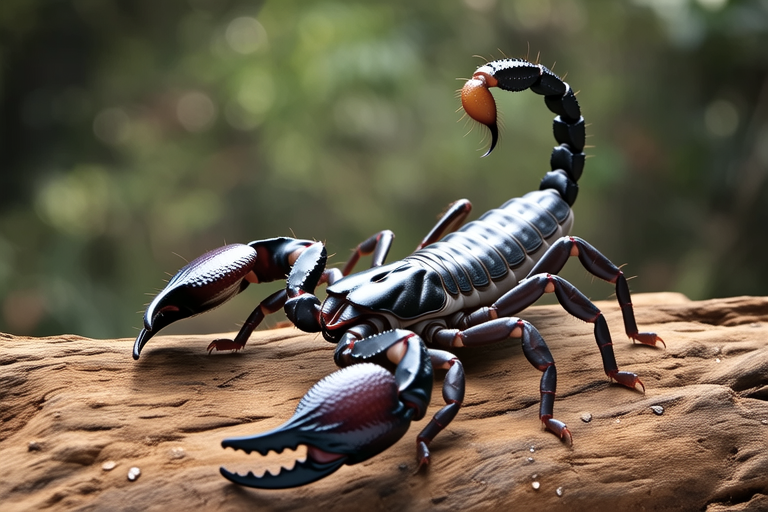
The Heterometrus spinifer is a large scorpion, typically ranging from 8 to 12 centimeters in length. It has a robust body with a broad, flat carapace that houses its cephalothorax, which contains the eyes, mouthparts, and chelicerae. The carapace is covered with numerous granules, giving it a rough texture. The pincers (chelae) are large and powerful, designed for grasping prey and defending against predators. The tail (metasoma) is long and slender, ending in a venomous stinger. The coloration of the Heterometrus spinifer is usually dark brown or black, which helps it blend into its forest habitat. Interestingly, the species exhibits sexual dimorphism; males have longer tails and more prominent pincers compared to females.
Habitat and Distribution
The Heterometrus spinifer is primarily found in tropical rainforests across Southeast Asia, including Malaysia, Thailand, Indonesia, and parts of southern China. It thrives in humid environments with dense vegetation, where it can find shelter under logs, rocks, and leaf litter. These scorpions are nocturnal, spending their days hidden from predators and emerging at night to hunt. They are adept climbers and can often be found on tree trunks and branches, making them excellent hunters in their forest homes. Despite their preference for forested areas, they can also be found in human settlements, particularly in rural areas where forests are nearby.
Diet and Feeding Habits
The Heterometrus spinifer is a carnivorous predator, feeding mainly on insects, spiders, and small vertebrates such as frogs and lizards. Its hunting strategy involves ambushing prey by lying in wait until an unsuspecting victim wanders within reach. Once the target is in range, the scorpion uses its powerful pincers to grasp the prey, immobilizing it. The venomous sting then delivers toxins that paralyze or kill the victim, allowing the scorpion to consume its meal. The venom is also used for defense, deterring potential threats. The Heterometrus spinifer’s diet is crucial for maintaining its energy levels and growth, as it requires a significant amount of protein to sustain its large size.
Reproduction Methods
The reproductive process of the Heterometrus spinifer is both fascinating and complex. Mating occurs during the rainy season when humidity levels are high, providing optimal conditions for successful reproduction. During courtship, the male initiates the process by performing a series of movements with his pedipalps (the appendages near the mouth). He then leads the female on a “mating dance,” guiding her to a suitable location for copulation. After mating, the female carries the fertilized eggs internally for several months before giving birth to live young. The newborn scorpions, called scorplings, are born alive and cling to their mother’s back for protection and nourishment. They remain with her for approximately two weeks before dispersing to fend for themselves. The mother’s nurturing behavior ensures the survival of her offspring in the challenging forest environment.
Myths and Misconceptions
Despite being a relatively harmless species, the Heterometrus spinifer has been the subject of many myths and misconceptions. One common myth is that all scorpions are deadly poisonous. In reality, while the Heterometrus spinifer does possess venom, it is generally not lethal to humans. However, its sting can cause localized pain, swelling, and numbness, similar to a bee sting. Another misconception is that scorpions always glow under ultraviolet light. While some species do exhibit fluorescence, this phenomenon is not universal across all scorpions, and it serves no known biological function. Understanding these myths helps dispel unnecessary fear and promotes a more accurate appreciation of the species.
Differences from Other Arachnids
The Heterometrus spinifer stands out among other arachnids due to several unique features. Unlike spiders, which rely on webs to catch prey, scorpions actively hunt their food using their powerful pincers and venomous sting. Scorpions also have a distinct tail structure, which is absent in spiders. Additionally, scorpions possess specialized sensory organs, such as the pectines located on the underside of their abdomen, which help them detect vibrations and chemicals in their environment. These adaptations enable scorpions to thrive in diverse habitats and play important roles in their ecosystems.
Role in the Ecosystem
The Heterometrus spinifer plays a vital role in its ecosystem as both a predator and prey. As a top predator in its habitat, it helps control populations of insects and other small animals, contributing to the balance of the forest ecosystem. By regulating prey populations, the scorpion indirectly influences the availability of resources for other organisms. Conversely, the Heterometrus spinifer itself serves as a food source for larger predators, such as birds, snakes, and mammals. Its presence in the ecosystem highlights the interconnectedness of species and the importance of maintaining biodiversity.
Recent Scientific Findings
Recent studies have shed new light on the life cycle and behavior of the Heterometrus spinifer. Researchers have discovered that the species exhibits a unique adaptation to its humid environment: the ability to produce silk-like threads from glands in its legs. These threads are used to create shelters and protect its offspring. Another exciting finding is the discovery of a previously unknown species of mite that lives symbiotically with the Heterometrus spinifer. The mites feed on the scorpion’s skin cells and waste products, while the scorpion benefits from pest control and possibly improved hygiene. These discoveries deepen our understanding of the species’ biology and its interactions with other organisms.
Interesting Facts
The Heterometrus spinifer is not only a fascinating creature but also one that captivates with its unique traits. Did you know that scorpions can survive for up to a year without eating? This adaptation allows them to endure periods of scarcity in their natural habitat. Another intriguing fact is that scorpions have been around for over 400 million years, making them one of the oldest surviving arachnid groups. Additionally, the Heterometrus spinifer’s venom contains a cocktail of peptides and proteins that scientists are studying for potential medical applications, such as pain management and cancer treatment. These interesting facts highlight the enduring appeal and importance of the species.
