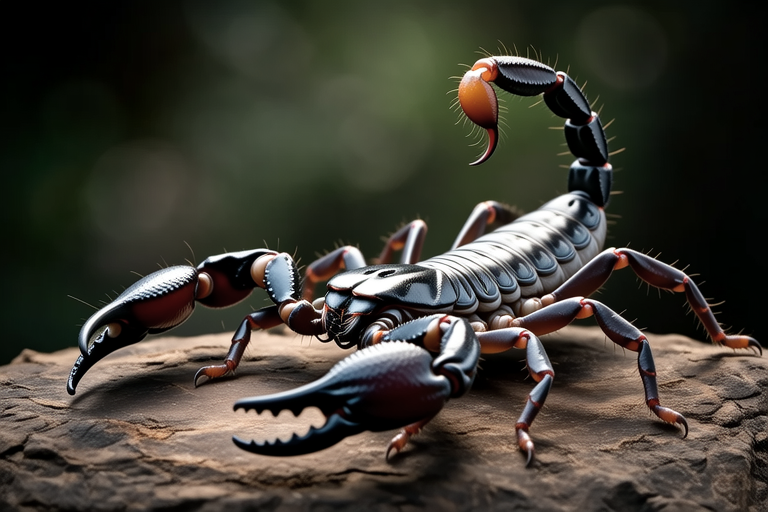
Unveiling the Mysteries of Heterometrus Spinifer: The Spinner Among Scorpions
The world of scorpions is a fascinating one, filled with creatures that have adapted to some of the harshest environments on Earth. Among these resilient arachnids, the Heterometrus spinifer, often referred to as the Spinner among Scorpions, stands out due to its unique physical attributes and behaviors. This article delves into the distinctive features of the Heterometrus spinifer, its natural habitat, hunting strategies, ecological role, and the potential medical applications derived from its venom.
Distinctive Physical Characteristics
The Heterometrus spinifer is easily recognizable by its robust body structure and a set of prominent spines that give it its common name. These spines, located along the tail and legs, serve multiple purposes. They act as both defensive weapons against predators and as tools for digging burrows in the ground. The spines are particularly effective in deterring smaller animals from approaching, as they can inflict painful wounds. The coloration of the Heterometrus spinifer is typically dark brown or black, providing excellent camouflage in its natural environment.
Natural Habitat and Behavior
Native to parts of Southeast Asia, the Heterometrus spinifer thrives in tropical and subtropical regions. It prefers humid environments such as dense forests and swamps, where it can find ample cover and prey. Unlike many desert-dwelling scorpions, which are nocturnal and hide during the day, the Heterometrus spinifer is active during both day and night. This diurnal/nocturnal activity pattern allows it to adapt to the varying light conditions in its forest habitat.
The hunting strategy of the Heterometrus spinifer is both efficient and deadly. As a sit-and-wait predator, it remains motionless for long periods, waiting for unsuspecting prey to come within striking distance. Its primary diet consists of insects, spiders, and small vertebrates. Once prey is detected, the scorpion uses its powerful pincers to grasp the victim and then injects venom through its stinger to immobilize it. The venom of the Heterometrus spinifer is potent but not lethal to humans, making it less dangerous compared to some of its more notorious relatives.
Ecological Role and Threats
Within its ecosystem, the Heterometrus spinifer plays a crucial role as both a predator and prey. By controlling populations of insects and other small animals, it helps maintain the balance within its habitat. Additionally, the scorpion itself serves as a food source for larger predators like birds and reptiles. Despite its importance, the Heterometrus spinifer faces several threats. Deforestation and habitat destruction pose significant risks to its survival. Conservation efforts are underway in some areas to protect its natural habitats and ensure its continued existence.
Comparing the Heterometrus spinifer with other scorpion species reveals several unique traits. For instance, while many desert scorpions rely on their ability to conserve water, the Heterometrus spinifer benefits from the moisture-rich environment of its forest home. Its larger size and more aggressive demeanor also set it apart from smaller, more docile species found in drier climates.
Understanding the Species and Medical Applications
The study of the Heterometrus spinifer offers valuable insights into broader ecological knowledge. Researchers are particularly interested in understanding how this species has adapted to its specific environment and how its behavior contributes to maintaining ecological balance. Furthermore, the venom of the Heterometrus spinifer holds promise for medical research. Scientists are exploring the potential of scorpion venom for developing new pain management treatments and anti-cancer drugs. While still in the experimental stages, these findings could lead to groundbreaking advancements in medical science.
In conclusion, the Heterometrus spinifer is a remarkable species with unique physical characteristics, behaviors, and ecological roles. Its ability to thrive in diverse environments and its significant contributions to scientific research make it a subject of great interest. By continuing to study and protect this scorpion, we can deepen our understanding of the natural world and potentially unlock new medical treatments.
