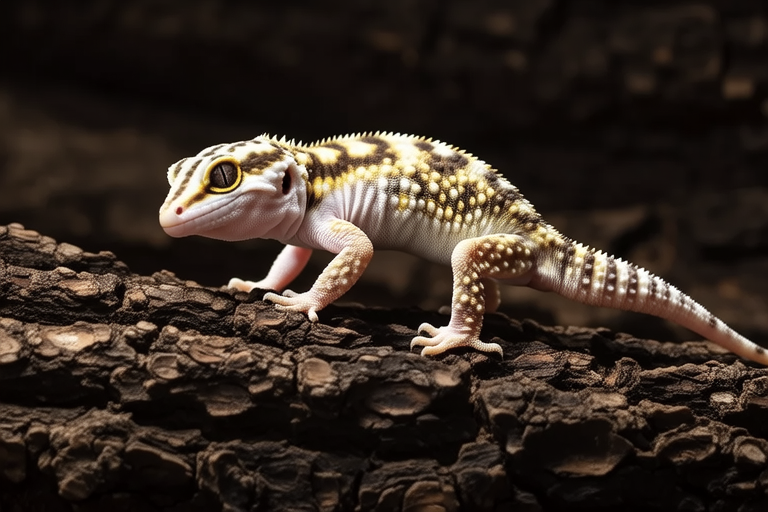
Unveiling the Mystery Behind Chameleon Color Changes
Chameleons, those fascinating reptiles with their vibrant hues and remarkable ability to change colors, have long captured the imagination of people around the world. Known for their distinctive features like their prehensile tails and independently rotating eyes, chameleons are perhaps best recognized for their ability to shift colors. This article aims to delve into the intricate world of chameleon color changes, dispelling common myths, exploring the biological mechanisms at play, and examining the various reasons behind these transformations.
The Enigma of Chameleons
Chameleons belong to the family Chamaeleonidae and are found across Africa, Madagascar, southern Europe, and parts of Asia. With over 200 species, they range from tiny, delicate creatures to larger, more robust ones. Their most notable feature is their ability to alter their skin color, which has often been misunderstood. Many believe that chameleons change colors to blend seamlessly into their surroundings, but this is only partially true. While camouflage plays a role, there are other compelling reasons for these color shifts.
Misconceptions About Chameleon Color Changes
A prevalent misconception is that chameleons can assume any color to match their environment perfectly. In reality, their palette is limited, primarily consisting of greens, browns, and grays. The primary purpose of their color changes is not just to hide but also to communicate and regulate body temperature. Another myth is that all chameleons can change color equally well; in fact, some species are more adept at it than others.
Biological Mechanisms: Chromatophores and Beyond
The biological process behind chameleon color changes involves specialized cells called chromatophores. These cells are located in layers beneath the chameleon’s skin. There are several types of chromatophores:
- Xanthophores: Contain yellow pigments.
- Erythrophores: Contain red pigments.
- Iridophores: Reflect light, producing iridescent blues and greens.
When a chameleon wishes to change its color, it sends neural signals to its chromatophores. These signals cause the cells to expand or contract, altering the distribution of pigments and light reflection. By manipulating these cells, chameleons can produce a wide array of colors and patterns.
Reasons for Color Changes
Chameleons use their color-changing abilities for multiple purposes:
Camouflage
Camouflage is one of the primary reasons for color changes. By blending into their environment, chameleons can avoid predators and ambush prey. For instance, a chameleon resting on a leaf might adopt a greenish hue to match the foliage. However, this is not always about perfect mimicry; sometimes, the goal is to appear less distinct, making it harder for predators to spot them.
Communication
Color changes are also vital for communication. Male chameleons, especially during mating season, display vivid colors to attract females or to intimidate rivals. They may turn bright red, orange, or blue to signal dominance or readiness to mate. Females, too, can change colors to indicate receptiveness or rejection.
Temperature Regulation
Chameleons also use color changes to help regulate their body temperature. Darker colors absorb more heat, while lighter colors reflect it. In cooler environments, chameleons may darken their skin to warm up, while in warmer conditions, they may lighten to cool down.
Examples of Color Changes in Different Environments
In the dense forests of Madagascar, where many chameleon species originate, the reptiles use their color-changing abilities to great effect. For example, the panther chameleon displays striking color patterns when courting, with males showing off bright blues, oranges, and yellows to impress females. In contrast, the veiled chameleon, native to the deserts of Yemen and Saudi Arabia, uses its color changes to cope with extreme temperatures. Its coloration shifts from green to brown to minimize heat absorption under the harsh desert sun.
Recent Research Findings
Scientists have made significant strides in understanding chameleon color changes. One groundbreaking study used advanced microscopy techniques to examine the structure of chameleon skin. Researchers discovered that iridophores contain layers of nanocrystals, which can be adjusted to reflect different wavelengths of light. This discovery explains how chameleons can produce such a wide spectrum of colors.
Another area of interest is the role of hormones in color changes. Studies have shown that stress levels can influence a chameleon’s coloration. When stressed, chameleons may display darker colors as a defensive mechanism. Conversely, relaxed chameleons tend to exhibit brighter, more vibrant colors.
Ongoing Mysteries
Despite the progress in understanding chameleon color changes, several mysteries remain. One of the biggest questions is why some species are better at changing colors than others. Scientists are still trying to determine if this difference is due to genetic variations or environmental factors.
Another intriguing aspect is the speed of color changes. Some chameleons can alter their colors almost instantaneously, while others take longer. Researchers are investigating the physiological processes that enable such rapid transformations, hoping to uncover new insights into cellular biology and biochemistry.
Conclusion
The ability of chameleons to change colors is a marvel of nature, serving multiple functions beyond simple camouflage. From communicating through vibrant displays to regulating body temperature, these reptiles have evolved an extraordinary tool for survival. As our understanding of chameleon color changes deepens, we continue to be amazed by the complexity and beauty of these creatures. Ongoing research promises to unravel even more secrets, offering us a deeper appreciation for the wonders of the natural world.
