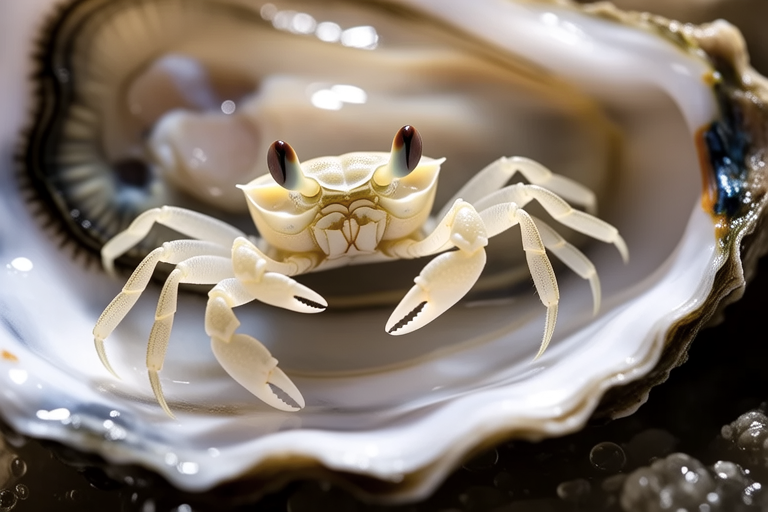
The Microscopic Mates: How Pea Crabs Survive Within Sea Creatures
Pea crabs, members of the family Pinnotheridae, are tiny crustaceans that live inside the bodies of various marine animals. These diminutive creatures, often no larger than a few millimeters, have evolved a unique lifestyle that is both fascinating and crucial to understanding marine ecosystems.
Introduction to Pea Crabs
Pea crabs are named for their small size, which can range from 3 to 15 millimeters in length. Their name is somewhat misleading, as they are not true peas but rather a type of crab. These crabs are typically found living within the mantle cavities of bivalves like oysters and clams or inside the body cavities of echinoderms such as sea cucumbers and sea stars. The habitat inside these hosts provides protection from predators and ensures a constant supply of food.
Symbiotic Relationship
The relationship between pea crabs and their hosts is a classic example of mutualism, where both species benefit. Pea crabs gain protection from predators and a reliable food source from the tissues and fluids of their hosts. In return, the hosts may receive benefits, although these are less well understood. Some studies suggest that the presence of pea crabs might enhance the reproductive success of their hosts by providing nutrients or by stimulating physiological changes. This mutualistic relationship is vital for the survival of both species.
Life Cycle of Pea Crabs
The life cycle of pea crabs is complex and involves several stages. Female pea crabs release their eggs into the water, where they hatch into free-swimming larvae. These larvae drift in the plankton until they find a suitable host. Once inside the host, the larvae undergo metamorphosis and develop into juvenile crabs. As they grow, they eventually reach adulthood, at which point they settle permanently within the host’s body cavity. Adult pea crabs are generally sessile, meaning they remain fixed in one place within their host.
Adaptations for Host-Living
Pea crabs have developed several adaptations that allow them to thrive within their hosts. Their flattened bodies enable them to fit snugly into the narrow spaces within their hosts. Additionally, they have modified appendages that help them move around inside the host and capture food particles. Pea crabs are also highly specialized in their behavior, avoiding areas of the host where they might cause damage or attract the attention of potential predators.
Variety of Host Species
Pea crabs are known to inhabit a wide variety of marine organisms, including bivalves, sea cucumbers, sea stars, and even some fish. Different species of pea crabs are adapted to different hosts, with some specializing in certain types of bivalves while others prefer sea cucumbers. This diversity in host species allows pea crabs to be found in many parts of the world’s oceans, from shallow coastal waters to deeper offshore environments.
Geographical Distribution
Pea crabs are distributed globally, with species found in both temperate and tropical seas. They are particularly abundant in regions with high biodiversity, such as coral reefs and estuaries. Some species of pea crabs are restricted to specific geographic areas, while others have a more widespread distribution. For instance, the genus Pinnotheres is common in European waters, while Parasesarma species are found in Asian and Australian waters.
Importance of Studying Pea Crabs
Understanding the relationship between pea crabs and their hosts is crucial for marine biology and conservation efforts. These relationships can provide insights into the dynamics of marine ecosystems and the factors that influence the health and distribution of species. By studying pea crabs, scientists can better understand the mechanisms of symbiosis and the roles that different species play in maintaining ecosystem balance. This knowledge can inform conservation strategies aimed at protecting marine biodiversity and ensuring the sustainability of marine resources.
In conclusion, pea crabs are fascinating creatures that have adapted to live within the bodies of other marine animals. Their symbiotic relationship with their hosts is a prime example of mutualism, benefiting both parties involved. The study of pea crabs and their hosts is essential for advancing our understanding of marine ecosystems and developing effective conservation strategies. As we continue to explore the intricate relationships within marine environments, the microscopic mates will undoubtedly provide valuable insights into the complexities of life beneath the waves.
