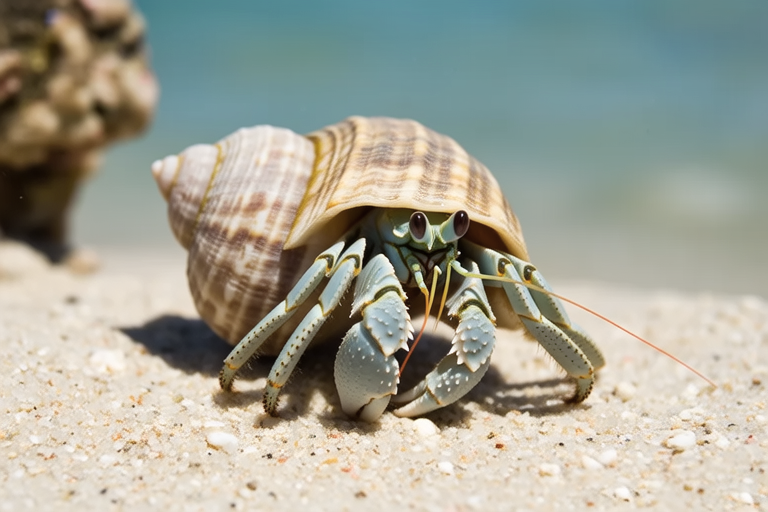
Hermit Crab Behavior: Decoding Their Mysterious Actions
Hermit crabs are fascinating creatures with a range of intriguing behaviors that have long captured the interest of scientists and nature enthusiasts alike. These small crustaceans have adapted to live in shells, a behavior that sets them apart from other crab species. In this article, we will delve into the various behaviors of hermit crabs, examining their shell-changing habits, social interactions, nocturnal tendencies, and how environmental factors influence their actions.
Shell Changing Habits
One of the most distinctive behaviors of hermit crabs is their habit of changing shells. This practice is crucial for their survival as it provides protection against predators and harsh environmental conditions. As hermit crabs grow, they outgrow their current shell, necessitating a search for a new one. The process of finding an appropriate shell is both competitive and strategic.
Hermit crabs assess potential shells based on size, shape, and availability. They often form queues, patiently waiting for larger crabs to vacate their shells. When a suitable shell becomes available, multiple crabs may compete for it, resulting in a rapid chain reaction where each crab quickly moves into a larger shell. This behavior ensures that all members of the community can find adequate protection as they grow.
The shell-changing process is not merely a matter of size; hermit crabs also prefer shells that offer good camouflage. Some species even decorate their shells with algae, sponges, or pieces of coral to blend into their surroundings, making them less visible to predators. This adaptation underscores the importance of a well-chosen shell in the hermit crab’s survival strategy.
Social Interactions Within Their Species
Contrary to their solitary appearance, hermit crabs are surprisingly social creatures. They frequently engage in communal activities, particularly when it comes to shell swapping. This cooperative behavior benefits all participants by ensuring that each crab finds a suitable home.
Hermit crabs have been observed gathering in large groups during low tide, when the risk of predation is lower. These gatherings serve multiple purposes, including mate selection and shell trading. Crabs often exchange smaller shells for larger ones, creating a dynamic system where resources are shared among the group. This social interaction highlights the hermit crab’s ability to work together for mutual benefit.
Communication between hermit crabs is subtle but effective. They use chemical signals, vibrations, and visual cues to interact with one another. For instance, when a crab senses a predator nearby, it may release pheromones to alert its neighbors, prompting them to seek shelter. This form of communication underscores the importance of social bonds within hermit crab communities.
Nocturnal Tendencies
Hermit crabs are primarily nocturnal animals, meaning they are most active during the night. This behavior serves several purposes, including avoiding daytime predators and taking advantage of cooler temperatures. Nocturnal activity patterns are deeply ingrained in their biology, influenced by both genetic and environmental factors.
During the day, hermit crabs typically remain hidden in their shells or burrowed in the sand, conserving energy and staying safe from predators such as birds and fish. At night, however, they emerge to forage for food, explore their environment, and engage in social activities. This shift in behavior is thought to be an evolutionary adaptation that allows them to thrive in environments where daytime temperatures are too high or dangerous.
Research has shown that hermit crabs have heightened sensory capabilities during nighttime hours, enabling them to navigate their surroundings more effectively. Their eyesight, while limited, is sufficient for detecting movement and identifying potential threats. Additionally, their antennae are highly sensitive, allowing them to detect chemical signals and vibrations in the dark.
Environmental Influences on Their Actions
The behavior of hermit crabs is heavily influenced by their environment, including factors such as temperature, humidity, and the presence of predators. These external stimuli play a critical role in shaping their daily routines and long-term survival strategies.
Temperature is a key factor in determining when hermit crabs are active. Cooler temperatures encourage more frequent shell changes and social interactions, while warmer conditions prompt them to retreat into their shells. Hermit crabs are ectothermic, meaning their body temperature is regulated by the surrounding environment. Consequently, they are more active when the ambient temperature is within their optimal range.
Humidity levels also affect hermit crab behavior. These creatures require a moist environment to maintain proper hydration and prevent desiccation. In areas with low humidity, hermit crabs may spend more time in their shells, emerging only briefly to forage for food. Conversely, in humid conditions, they are more likely to venture out and engage in social activities.
The presence of predators significantly impacts hermit crab behavior. When threatened, hermit crabs exhibit defensive postures, such as withdrawing into their shells or hiding in crevices. They may also release chemicals to deter predators or signal danger to nearby crabs. These responses demonstrate the hermit crab’s ability to adapt to changing environmental conditions and protect themselves from harm.
Conclusion
Hermit crabs are complex creatures with a wide array of behaviors that reflect their unique adaptations and social dynamics. From their strategic shell-changing habits to their nocturnal tendencies and social interactions, these behaviors are essential for their survival and well-being. Understanding the environmental factors that influence their actions provides valuable insights into the lives of these fascinating creatures.
By studying hermit crab behavior, we gain a deeper appreciation for the intricate web of life in coastal ecosystems. Whether you’re a seasoned biologist or simply curious about the natural world, exploring the mysteries of hermit crab behavior offers a rewarding glimpse into the wonders of marine life.
