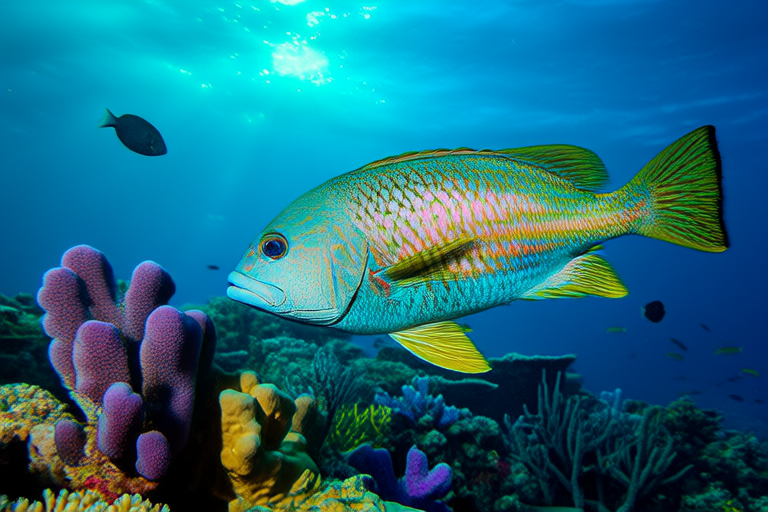
The Colorful Underwater World of Parrot Fish: A Dive into Vibrancy
In the vast ocean, there exists a realm where vibrant hues dance beneath the waves, creating a spectacle that rivals the most vivid dreams. This is the underwater world of the parrot fish, a group of marine creatures whose striking colors and fascinating behaviors have captivated divers and marine biologists alike. These fish, with their array of brilliant shades and intricate patterns, play a crucial role in maintaining the health of coral reefs, which are among the most diverse and vital ecosystems on Earth.
The Palette of Parrot Fish
Parrot fish are renowned for their dazzling displays of color. From electric blues to fiery reds, these fish can be found in a myriad of hues, often adorned with intricate patterns that seem almost too elaborate for the natural world. The juvenile stages of many species showcase delicate pastel tones, transitioning into more bold and contrasting colors as they mature. Each species has its own unique palette, making them a true feast for the eyes. For instance, the queen parrot fish (Scarus vetula) sports a stunning combination of yellow, blue, and green, while the stoplight parrot fish (Sparisoma viride) dazzles with a mix of red, orange, and yellow. Their vibrant appearance serves multiple purposes, from attracting mates to warding off predators.
Habitats and Behavior
Parrot fish are primarily found in tropical and subtropical waters, inhabiting coral reefs, seagrass beds, and rocky shores. They prefer shallow waters, typically staying close to the surface where sunlight penetrates, enabling the growth of algae, their primary food source. Coral reefs provide the ideal habitat for parrot fish, offering both shelter and sustenance. These fish are diurnal, meaning they are most active during the day, spending their time grazing on algae and coral polyps. Their feeding habits involve scraping algae from rocks and corals using their strong, parrot-like beaks, hence their name. This activity not only provides them with nutrition but also helps maintain the health of the reef by preventing the overgrowth of algae.
Feeding Habits and Ecological Role
Parrot fish are herbivores, primarily feeding on algae that grow on coral reefs. Their diet consists mainly of filamentous and fleshy algae, which they scrape off rocks and coral surfaces using their beaks. This constant grazing plays a critical role in maintaining the balance of the reef ecosystem. By controlling algal growth, parrot fish help ensure that corals receive sufficient sunlight, which is essential for their photosynthesis process. In addition, their feeding habits lead to the production of sand. As they consume calcium carbonate from coral skeletons, their digestive systems break down this material, excreting it as fine sand. This process contributes significantly to the formation of beaches and atolls, making parrot fish indispensable to the overall health of coastal environments.
Unique Adaptations
Parrot fish possess several remarkable adaptations that enable them to thrive in their challenging underwater environment. One of the most notable is their ability to change color and pattern, a trait that aids in camouflage and communication. During the night, many species adopt a drab, mottled appearance to blend in with the surroundings, helping them avoid nocturnal predators. Additionally, some species have the ability to rapidly change their coloration when threatened or during mating rituals. Another unique adaptation is their nocturnal sleeping bags – a mucus cocoon they secrete around themselves to deter parasites and predators. This protective layer is believed to mask the fish’s scent, making it harder for nocturnal hunters to detect them.
Threats and Conservation
Despite their importance to reef ecosystems, parrot fish face numerous threats due to environmental changes and human activities. Overfishing poses one of the greatest dangers, as their vibrant colors make them highly sought after in the aquarium trade. Additionally, the destruction of coral reefs due to climate change, pollution, and unsustainable fishing practices further exacerbates their plight. Rising sea temperatures and ocean acidification also threaten the survival of parrot fish, as these conditions weaken coral structures and disrupt the balance of reef ecosystems. Conservation efforts are crucial to protect these vital fish, including sustainable fishing practices, marine protected areas, and international cooperation to address global challenges like climate change.
Conclusion
The colorful underwater world of parrot fish is a testament to the beauty and complexity of marine life. Their vibrant colors, intriguing behaviors, and crucial role in maintaining coral reef health make them a focal point of fascination for both scientists and enthusiasts. However, the threats they face highlight the urgent need for conservation efforts to ensure the continued vibrancy of our oceans. By understanding and appreciating these remarkable creatures, we can work towards preserving the delicate balance of marine ecosystems for future generations.
