The Intelligent Aquatic Marvel: Unraveling the Secrets of Arowana Behavior
The arowana, often referred to as the dragonfish due to its prehistoric appearance, is a remarkable species that has captured the imagination of aquarists and marine biologists alike. Known for its striking looks and intelligent demeanor, this fish is found in various parts of the world, primarily in tropical regions.
Unique Appearance and Native Habitats
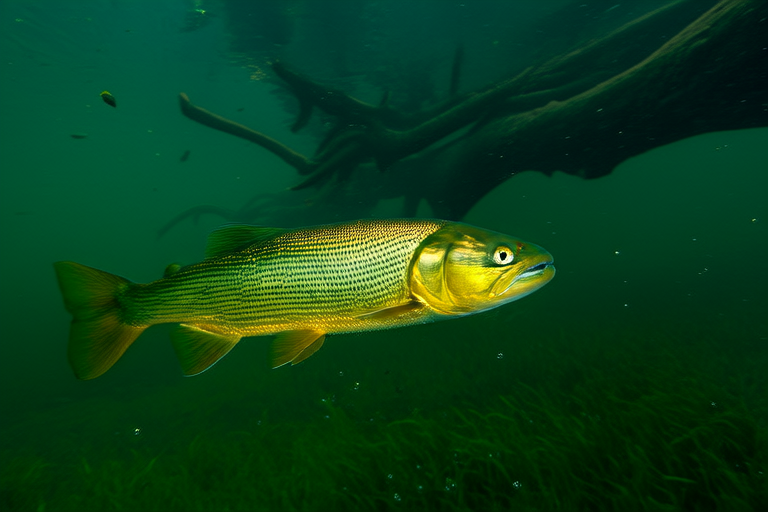
Arowanas possess a distinctive appearance, characterized by elongated bodies and long pectoral fins that resemble wings. Their scales are large and iridescent, reflecting hues of green, gold, or red, depending on the species. These features contribute to their allure, making them a popular choice for aquariums.
Native to the rivers and swamps of Southeast Asia, South America, and Africa, arowanas thrive in warm, slow-moving waters rich in vegetation. They are highly adapted to their environments, which include densely forested areas and clear water bodies. In these settings, they hunt for insects, smaller fish, and even small birds or bats that may fall into the water.
The Intelligence of Arowanas
Arowanas are known for their high level of intelligence, showcasing remarkable problem-solving skills and complex behaviors. One notable example of their intelligence is their ability to leap out of the water to catch prey. This behavior, reminiscent of dolphins, demonstrates their adaptability and resourcefulness. In controlled experiments, arowanas have shown the capacity to learn from their environment and adjust their strategies to achieve goals, such as opening tank lids to access food.
Interactions between arowanas and humans also highlight their intelligence. They can recognize individual caretakers and respond to specific stimuli, such as the sound of footsteps approaching their tank. This interaction suggests a level of awareness and emotional intelligence rarely seen in other aquatic species.
Behavior in the Wild vs. Captivity
In the wild, arowanas exhibit territorial behavior, defending their chosen territories against intruders. Their feeding habits are opportunistic, and they are voracious predators, capable of consuming a wide range of prey. Social structures in the wild are less understood, but it’s believed that they form loose groups based on shared resources.
Captivity presents a different scenario. In aquariums, arowanas can become more docile and social, forming bonds with their caretakers. Their feeding habits in captivity are easier to observe and manage, allowing for a more controlled diet. However, their intelligence requires mental stimulation, and enrichment activities are crucial to prevent boredom and promote well-being.
Communication among arowanas involves visual signals, body movements, and possibly sound. While their vocalizations are not well-documented, their physical interactions and responses to environmental changes suggest a sophisticated system of communication.
