The Captivating World of Bengal Cats
Bengal cats are a breed of domestic cats known for their striking appearance and lively personalities. They are a hybrid breed resulting from the crossbreeding of domestic cats with Asian leopard cats. This article explores the origins, unique characteristics, and behaviors of Bengal cats, highlighting their wild ancestry and domestic charm.
Origins and History
The Bengal cat’s history is a fascinating tale of genetic experimentation and selective breeding. The journey began in the 1960s when Jean Mill, an American breeder, sought to create a domestic cat with the spotted coat of wild cats but the temperament of a house cat. She achieved this by crossing a domestic shorthair with an Asian leopard cat. Over time, through selective breeding, the Bengal cat was developed as a distinct breed recognized by various cat registries.
Unique Characteristics and Behaviors
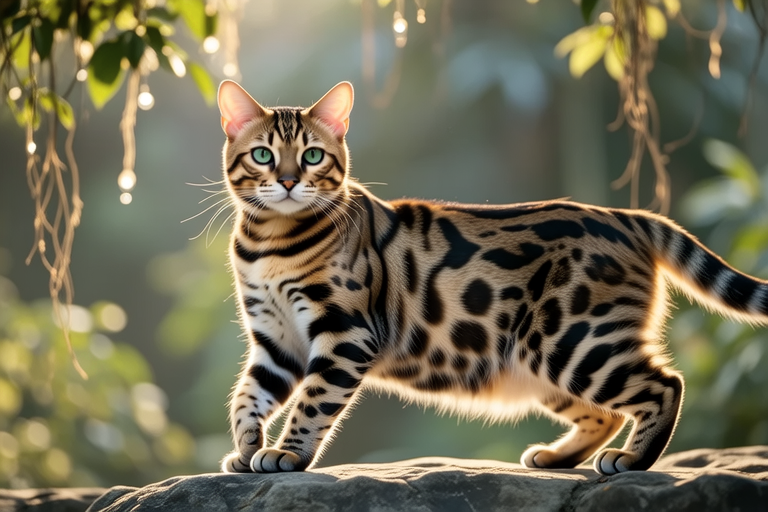
Bengal cats possess several unique traits that distinguish them from other breeds. Their most notable feature is their coat, which resembles the fur of wild cats. Bengal cats have a luxurious, short, and dense coat that comes in various colors and patterns, including leopard-like rosettes, marbles, and snows. Their coat patterns are often described as ‘wild-looking,’ making them stand out among other domestic cats.
One of the most distinctive features of Bengal cats is their large, expressive eyes. These almond-shaped eyes come in shades of green, gold, or copper, adding to their exotic appearance. Their eyes are framed by dark markings, enhancing their wild look. Additionally, Bengal cats have a muscular build and a sleek, athletic body that reflects their wild heritage. They are agile, quick, and highly energetic, making them excellent climbers and jumpers.
Personality and Intelligence
Bengal cats are known for their friendly and outgoing personalities. They are social creatures who enjoy interacting with their human companions and other pets. Bengal cats are often described as being ‘dog-like’ due to their loyalty and affectionate nature. They love to play and are always up for a game or a cuddle. Their intelligence sets them apart from other breeds; they are curious, inquisitive, and enjoy exploring their environment. This makes them ideal companions for active individuals who enjoy engaging with their pets.
Bengal cats are also known for their vocalizations. They communicate through a variety of sounds, from soft purrs to loud meows. Some Bengal cats even learn to mimic human speech, making them even more engaging and entertaining. Their playful and intelligent nature means they can be trained to perform tricks and respond to commands, further strengthening the bond between owner and pet.
Care and Maintenance
Owning a Bengal cat requires commitment and proper care to ensure their well-being. Bengal cats require regular grooming to maintain their luxurious coats. Weekly brushing helps remove loose hair and prevents matting. Bathing is usually unnecessary unless the cat gets dirty or develops a skin condition. Owners should also provide their Bengals with plenty of mental and physical stimulation. Interactive toys, climbing structures, and puzzle feeders are great ways to keep Bengals engaged and prevent boredom.
Bengal cats are generally healthy and have a lifespan of 12 to 16 years. However, like all breeds, they are susceptible to certain health issues. Common problems include hip dysplasia, hypertrophic cardiomyopathy, and progressive retinal atrophy. Regular veterinary check-ups, a balanced diet, and routine vaccinations are essential to maintaining their health.
Anecdotes and Testimonials
Bengal cat owners often share stories about the unique bond they share with their feline companions. One owner, Sarah, recounts how her Bengal cat, Luna, has become a constant source of joy and entertainment. “Luna is always up for a game of fetch or a round of hide-and-seek,” she says. “She’s incredibly intelligent and has learned to open doors and cabinets. She’s truly a part of our family.”
Another owner, Mark, shares his experience with his Bengal cat, Max. “Max is an incredible jumper,” he says. “He can leap onto high shelves and catch toys mid-air. He’s also very affectionate and loves to curl up on my lap for a nap. His energy and playfulness never cease to amaze me.”
Bengal cats are indeed captivating companions, combining the wild allure of their ancestors with the domestic charm of their modern-day counterparts. Their unique appearance, playful and intelligent nature, and strong bond with their owners make them a popular choice for cat lovers worldwide.
