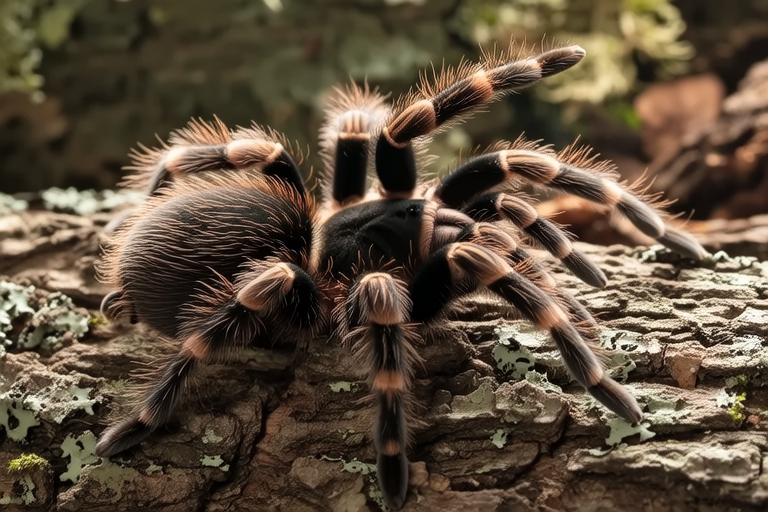
Tarantulas and Their Unique Defense Mechanisms: Nature’s Built-In Safeguards
Welcome to the fascinating world of tarantulas! These large, hairy spiders have long been the subject of myths and fears, often misunderstood by many. With a body length ranging from 2.5 cm to 10 cm (excluding legs), tarantulas are some of the largest arachnids on Earth. They inhabit a wide range of environments, from tropical rainforests to deserts, making them one of nature’s most adaptable creatures.
Despite their intimidating appearance, tarantulas are generally shy and non-aggressive. A common misconception is that they are highly venomous and dangerous to humans. In reality, their venom is typically mild and only poses a significant threat to small prey or individuals with severe allergic reactions. However, their ability to defend themselves against predators is nothing short of remarkable. Let’s dive into the unique defense mechanisms that make tarantulas such successful survivors.
The Venomous Bite: A Last Resort
One of the most feared aspects of tarantulas is their venomous bite. While it is true that tarantulas possess venom glands, they rarely use them as a primary defense. Instead, they prefer to retreat or employ other methods to avoid confrontation. When cornered, however, they can deliver a painful bite that releases venom into the victim. The venom acts as a neurotoxin, affecting the nervous system of the prey. This allows the tarantula to immobilize its target before feeding.
For example, the Lasiodora parahybana, commonly known as the Brazilian salmon pink tarantula, has a potent venom that can cause localized pain and swelling in humans. However, it is not lethal and serves more as a deterrent than a means of killing larger threats.
Urticating Hairs: Nature’s Itchy Deterrent
Perhaps one of the most intriguing defense mechanisms of tarantulas is their urticating hairs. Found primarily on the abdomen of New World tarantulas, these tiny, barbed hairs serve as a formidable weapon. When threatened, the tarantula rubs its hind legs against its abdomen, causing the hairs to detach and fly through the air. These hairs can irritate the skin, eyes, and respiratory systems of potential predators, effectively deterring attacks.
The Aphonopelma hentzi, also known as the Texas brown tarantula, is particularly adept at using this method. Its urticating hairs are especially effective, and the discomfort caused by contact can last for several days. Interestingly, these hairs can also be used in courtship displays, where males present them to females as part of their mating ritual.
Playing Dead: The Art of Feigning Death
Another clever tactic employed by tarantulas is playing dead. When faced with a predator, some species will go limp and lie motionless, appearing lifeless. This behavior can confuse or deter predators, giving the tarantula time to escape unnoticed. This strategy is particularly useful in situations where the tarantula cannot rely on its speed or agility to flee.
The Pamphobeteus nigricolor, or the black earth tarantula, is known for its ability to play dead convincingly. By remaining still and unresponsive, it can trick predators into thinking it is no longer a viable target, allowing it to survive another day.
Impressive Escape Tactics
Tarantulas are masters of evasion, employing a variety of tactics to outmaneuver their predators. Some species are excellent diggers, creating burrows that serve as both homes and hiding spots. Others are skilled climbers, capable of scaling vertical surfaces to reach safety. Still others rely on their camouflage abilities, blending seamlessly into their surroundings to avoid detection.
The Aphonopelma chalcodes, or the desert tarantula, is particularly adept at digging elaborate burrows. These underground sanctuaries provide protection from harsh environmental conditions and predators alike. Additionally, the desert tarantula’s sandy coloration helps it blend into its surroundings, making it nearly invisible to passing threats.
Understanding Tarantulas: Why It Matters
By exploring the unique defense mechanisms of tarantulas, we gain a deeper appreciation for these remarkable creatures. Their ability to adapt and survive in diverse environments underscores the importance of biodiversity and ecological balance. Understanding tarantulas also helps dispel common myths and promotes respect for these animals in their natural habitats.
It is crucial to remember that while tarantulas may seem intimidating, they pose little threat to humans. Encounters with these spiders are rare, and when they do occur, they are usually harmless. By fostering a culture of curiosity and respect, we can better coexist with tarantulas and other wildlife, ensuring their survival for future generations.
In conclusion, tarantulas are fascinating creatures with a rich array of defense mechanisms. From venomous bites to urticating hairs, playing dead to impressive escape tactics, these spiders have evolved to thrive in their respective environments. By learning about and respecting these amazing creatures, we can contribute to their conservation and help maintain the delicate balance of our ecosystems.
